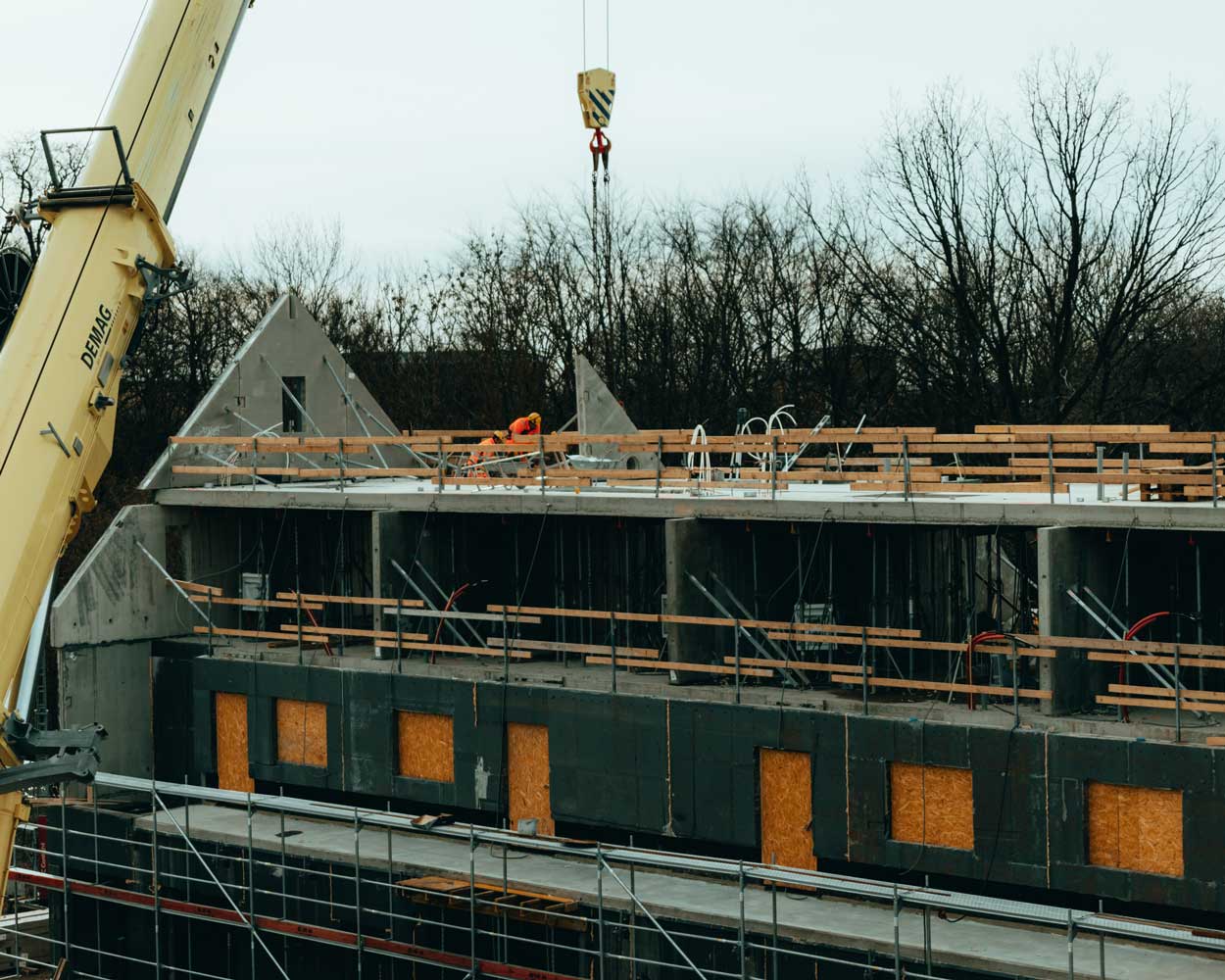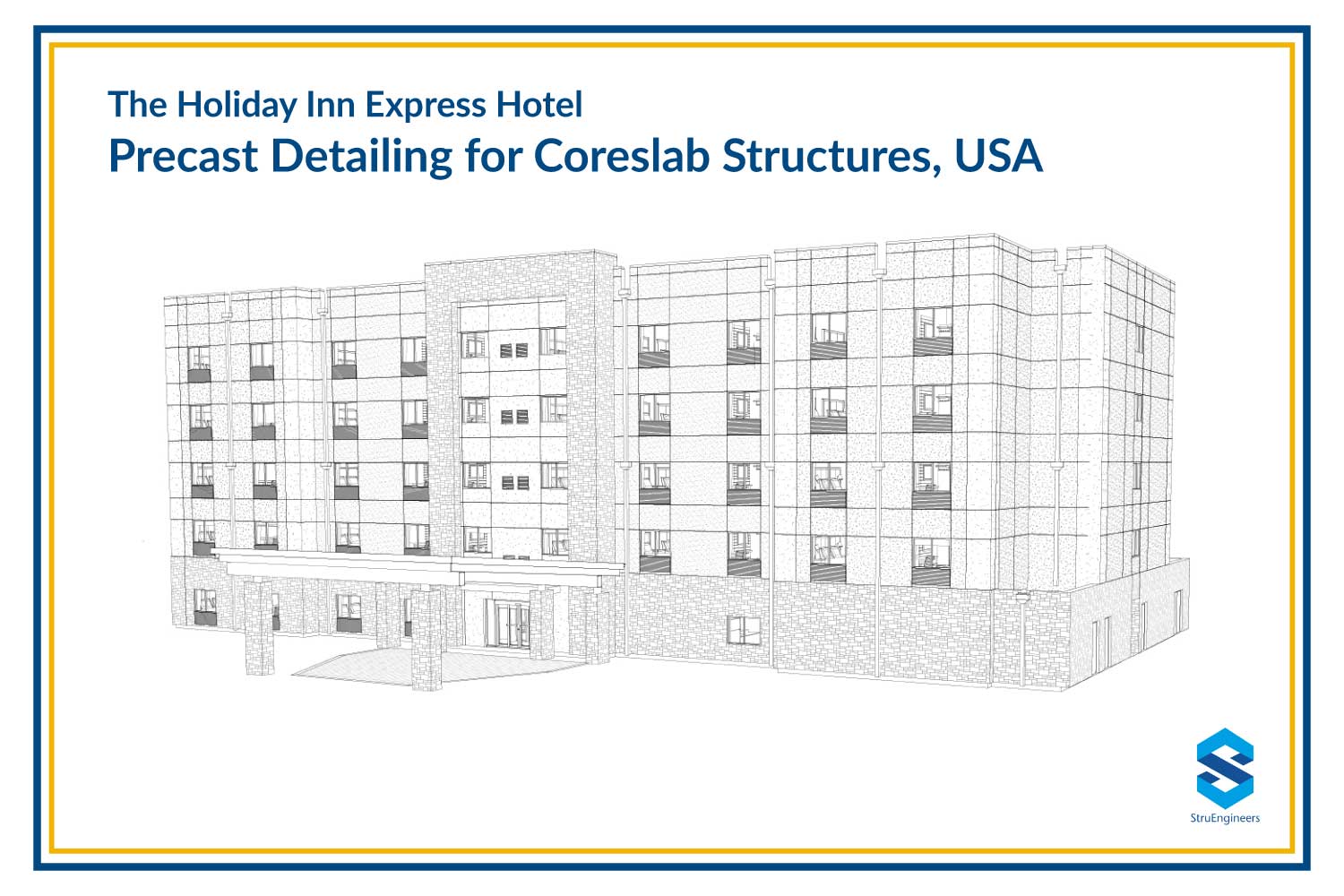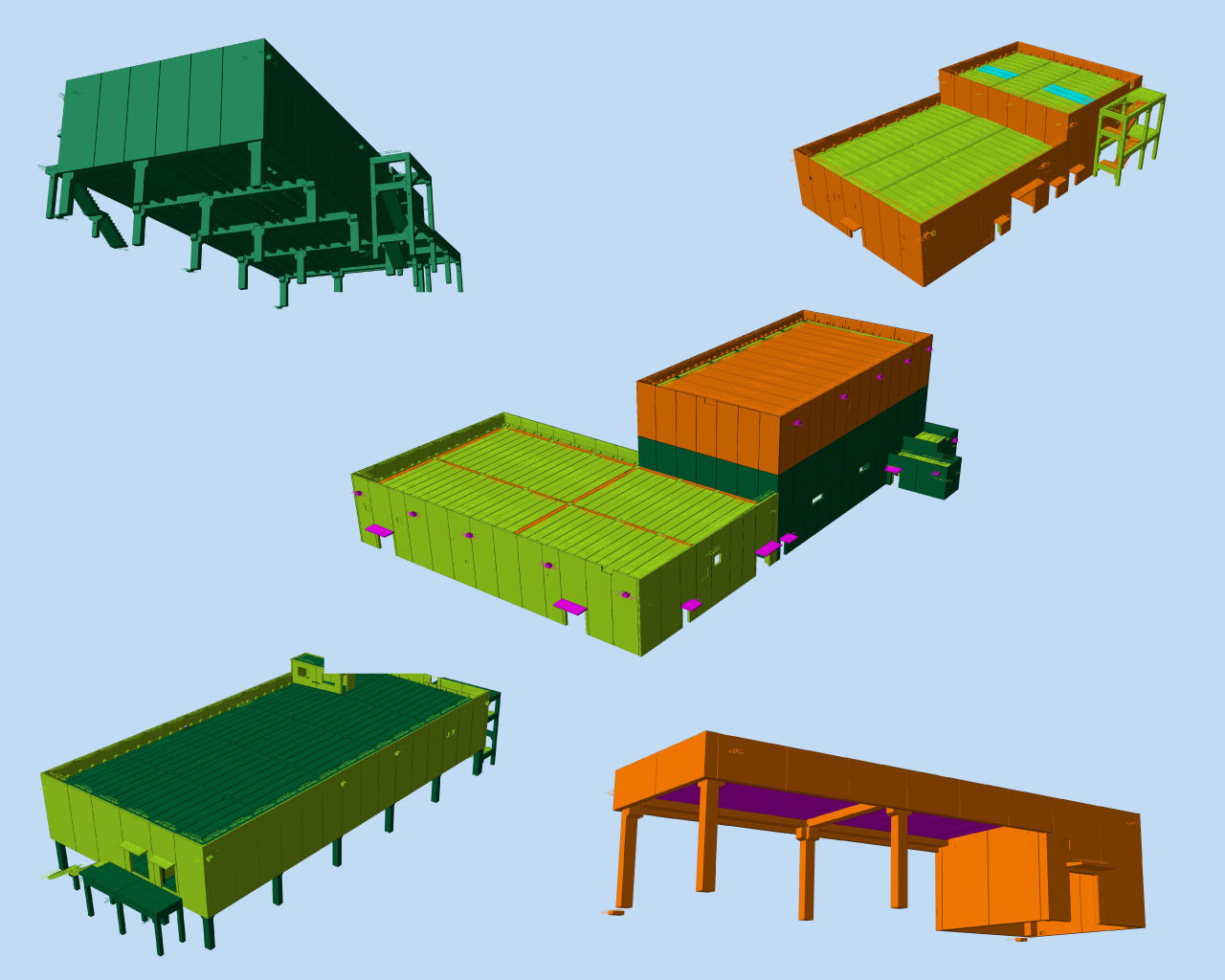
In the modern construction landscape, speed and structural integrity are paramount. This case study explores a comprehensive Precast Building System (PCBS) project involving the development of six distinct commercial and utility structures. By leveraging advanced modeling software and a specialized engineering team, the project transitioned from architectural concepts to fabrication-ready shop drawings in just two months.
Project Overview & Scope
The objective was to design and detail a series of high-performance commercial buildings, primarily serving as office spaces and essential electrical utility facilities. The scope encompassed six buildings, each presenting unique functional requirements and structural complexities.
The project demanded a hybrid approach of single and two-story designs, requiring meticulous coordination between load-bearing precast elements and architectural interfaces.
The specialized structures included:
- CCR & MEB Buildings: High-occupancy office and control centers.
- ACC & EEB Buildings: Complex utility hubs requiring precise structural integration.
- Substation & Service Gas Buildings: Industrial-grade facilities designed for durability and safety.
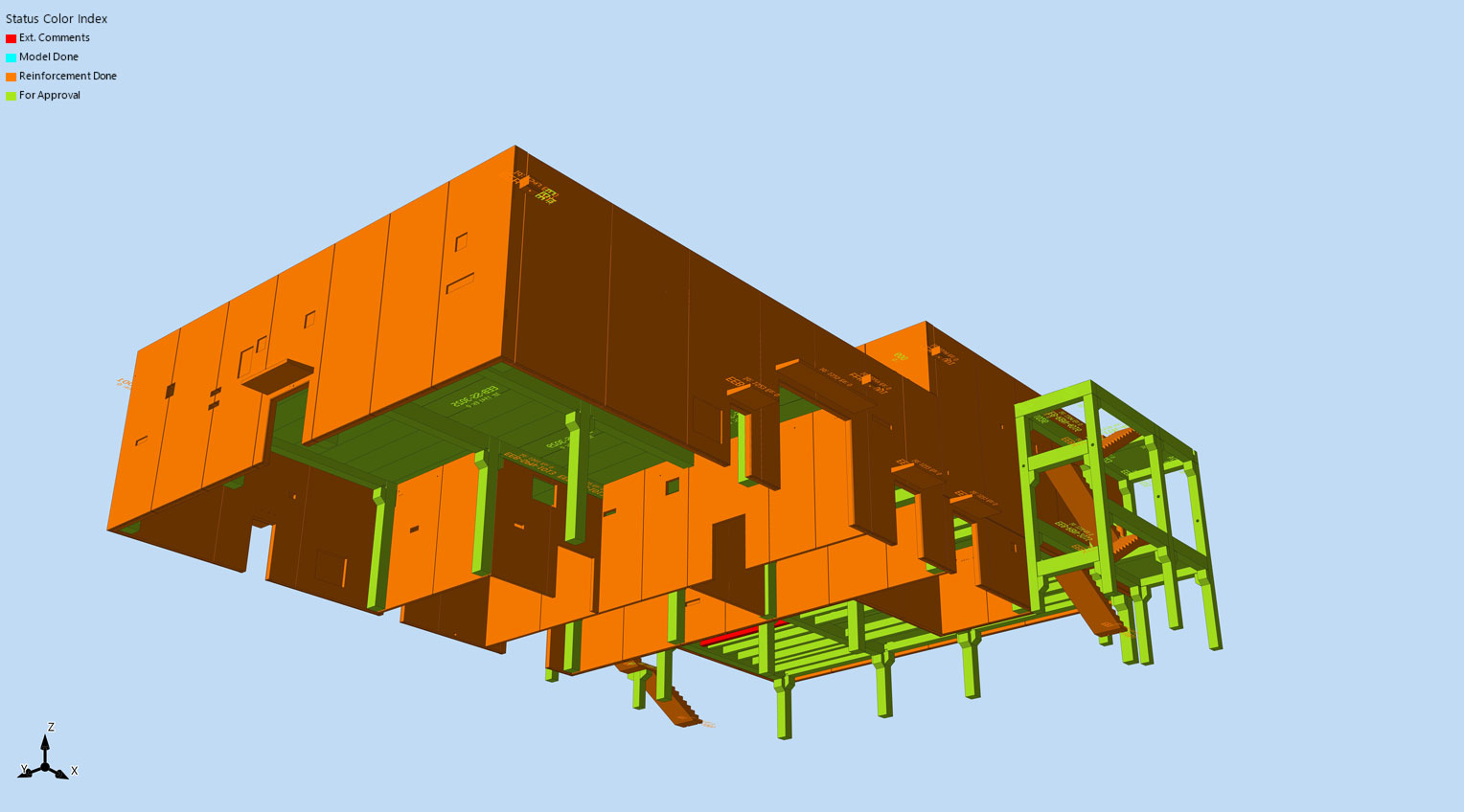
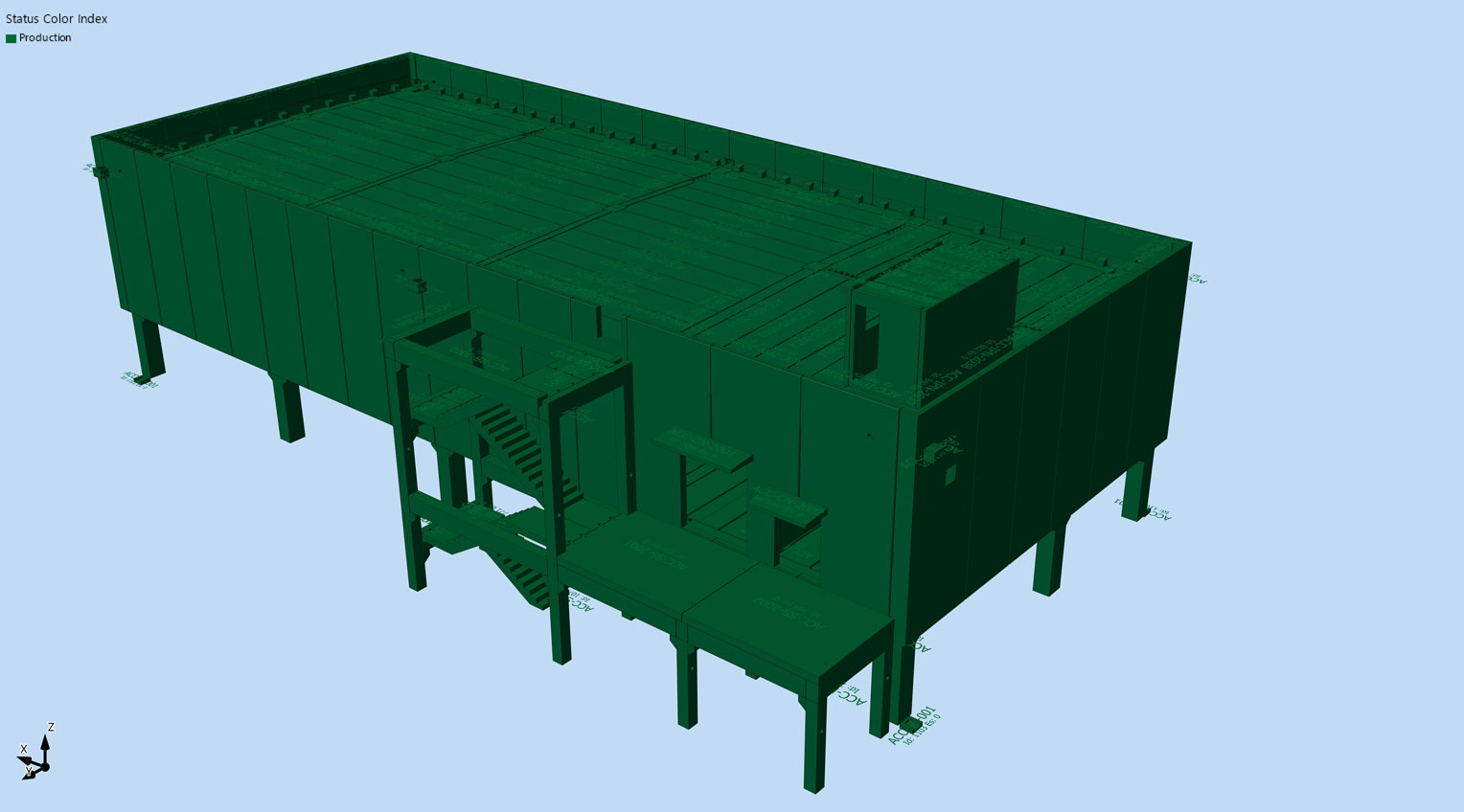
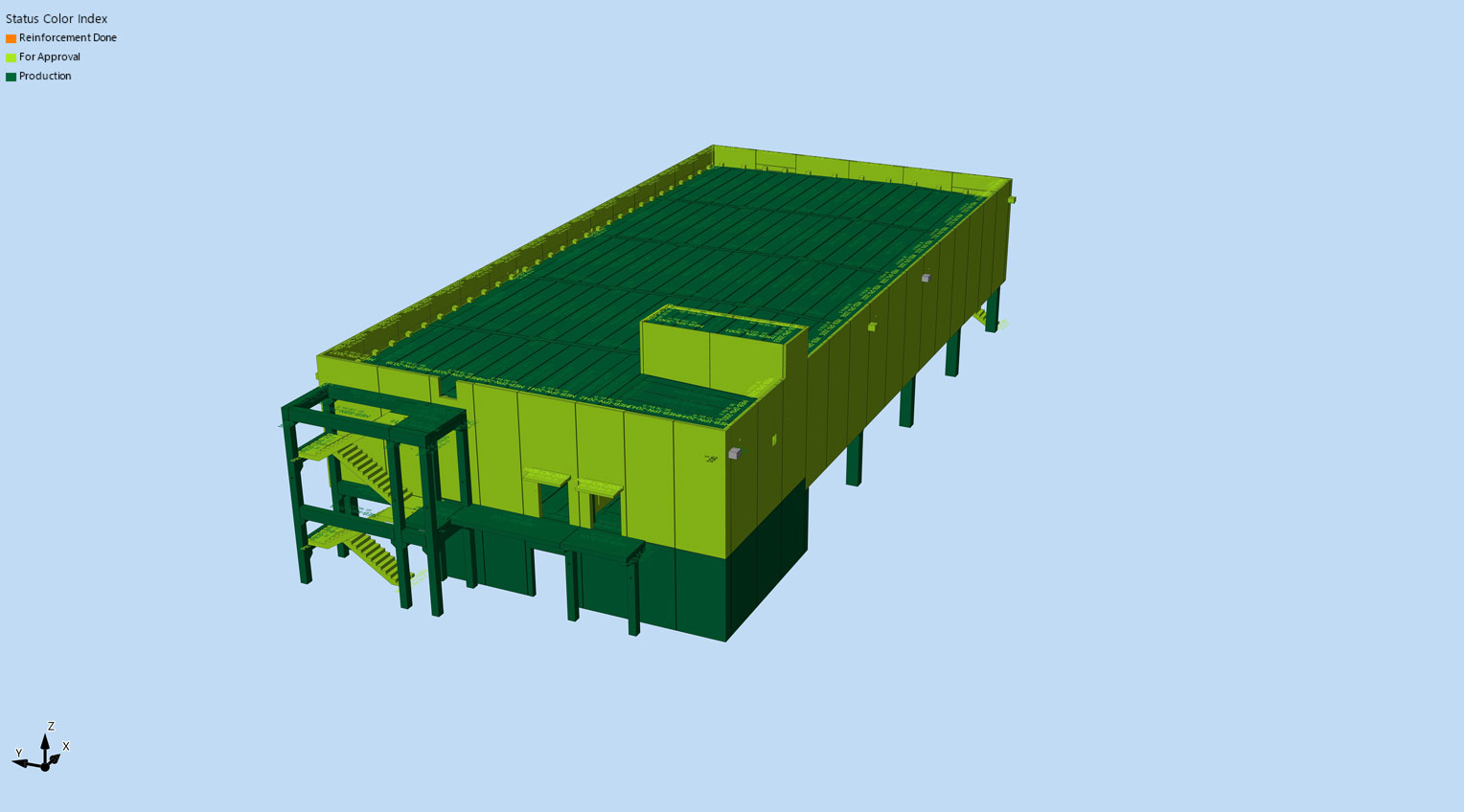
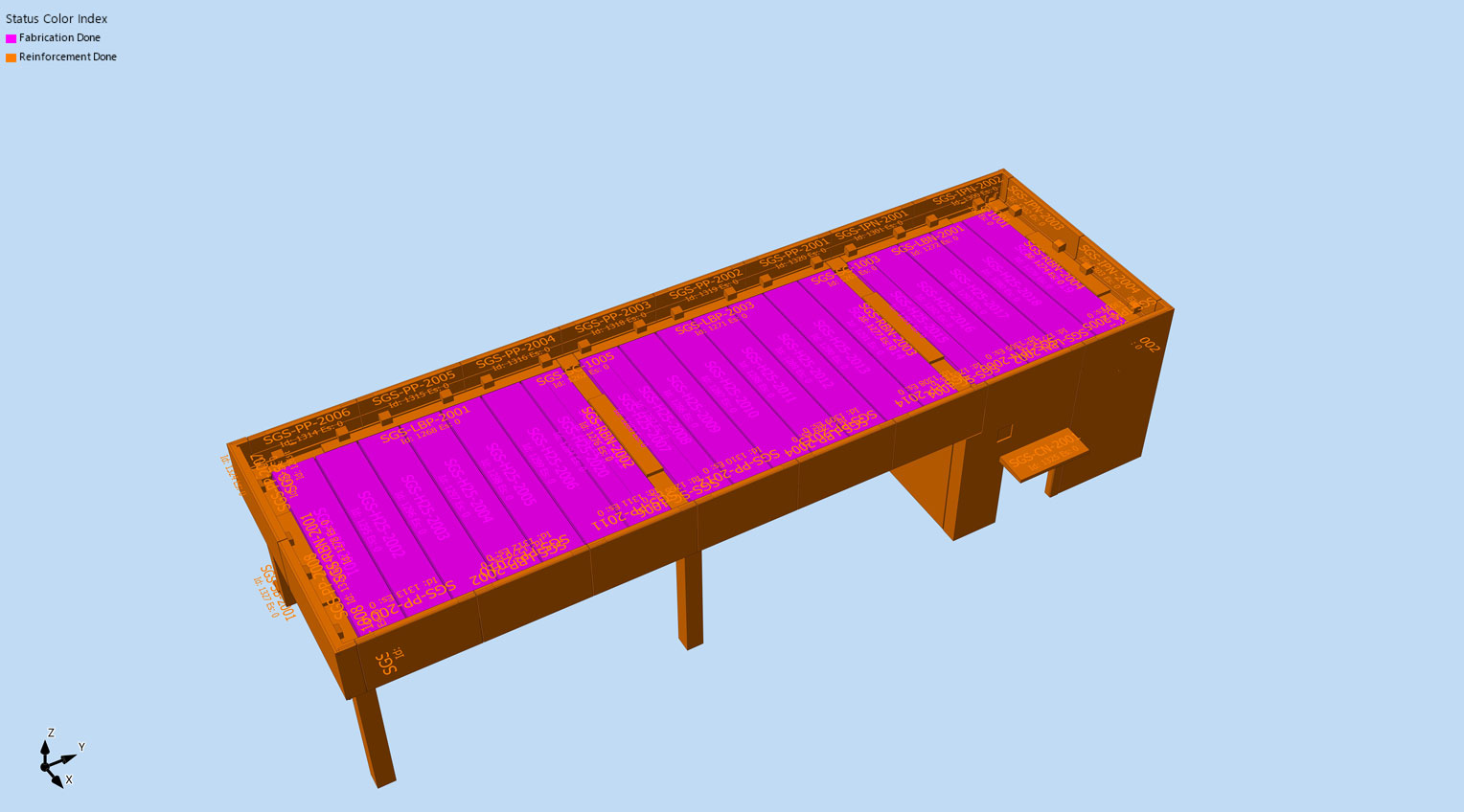
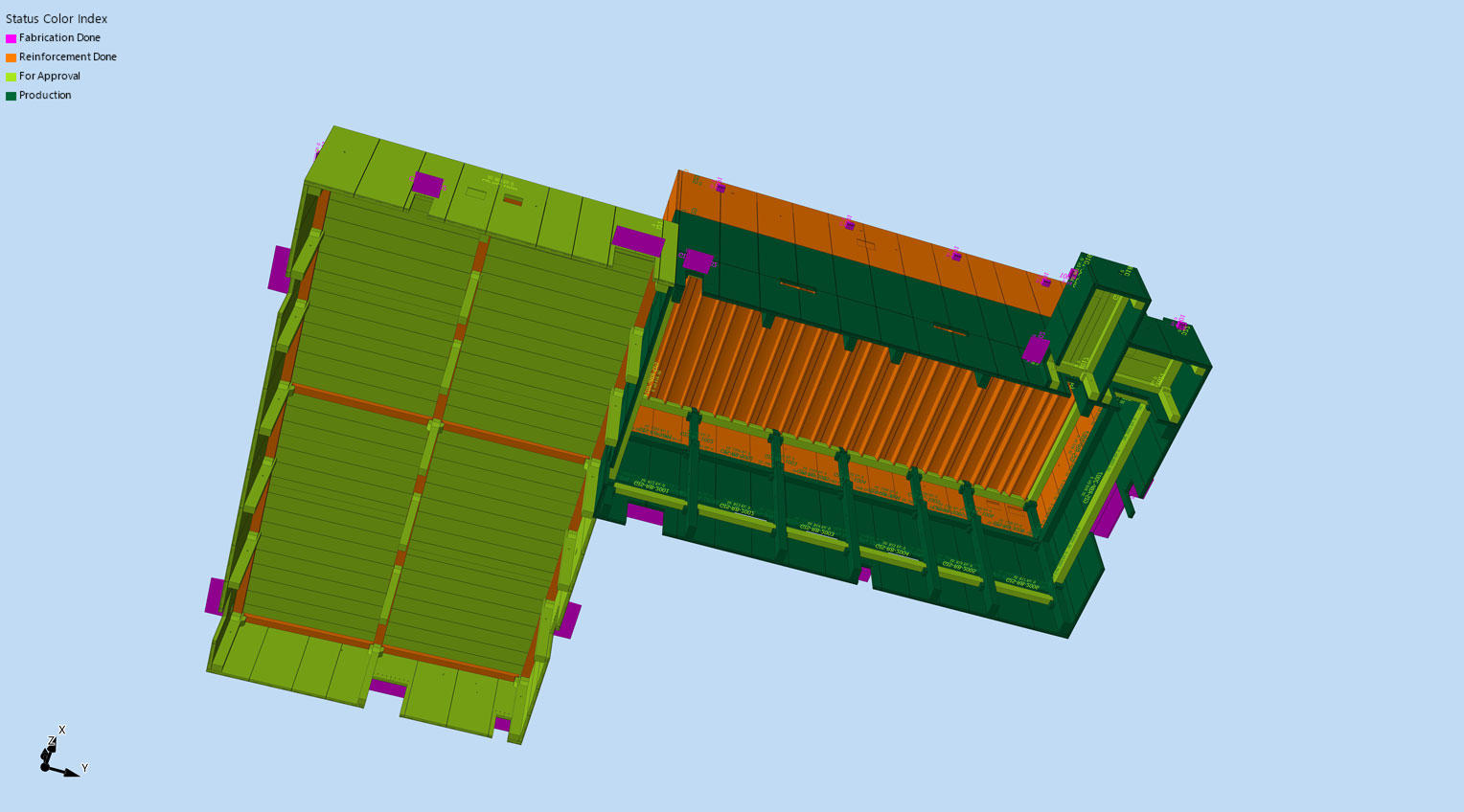
The Structural Strategy: Diverse Precast Elements
To achieve a balance of rapid onsite erection and long-term durability, a wide array of precast components was utilized. This diversity allowed the team to optimize load transfer and maintain consistency across the entire complex.
Key Elements Integrated:
- Horizontal Members: Beams, Hollow Core Slabs (HCS), Double T Slabs, and Prestressed Solid Slabs (PSS).
- Vertical Members: Columns and a mix of Solid and Sandwich Walls.
- Ancillary Components: Precast Staircases, Canopies, and Scuppers.
Surface Finish & Face Definition
To ensure the structures were “finish-ready,” every element was produced with strictly defined face conditions:
- Smooth Face: Applied to inner visible sides for exposed architectural finishes.
- Mould Face: Controlled casting quality for external structural integrity.
- Rough Face: Specifically engineered for areas requiring secondary bonding or specialized finishes.
Engineering Precision: Tolerance & Logistics
A rigorous 20 mm tolerance strategy was implemented across all 1,600+ precast elements. This was not merely a safety margin; it was a proactive measure to:
- Ensure seamless “Lego-like” fitting during the erection phase.
- Absorb site-level deviations without requiring costly on-site modifications.
- Minimize conflicts between structural skeletons and architectural skins.
Detailed Element Distribution
| Building | Beams | Columns | Walls | Slabs (HCS/SS/PSS) | Extras (Stairs/Canopies) |
|---|---|---|---|---|---|
| CCR | 46 | 23 | 105 | 130 | 36 |
| MEB | 53 | 27 | 85 | 194 | 5 |
| ACC | 53 | 25 | 55 | 111 | 10 |
| Substation | 60 | 28 | 90 | 83 (incl. Double T) | 5 |
| EEB | 57 | 28 | 70 | 132 | 12 |
| Service Gas | 10 | 8 | 22 | 21 | 3 |
Technology Stack & Workflow
The project was executed through a traditional, high-security data environment rather than cloud-based platforms. This required exceptional version control and organizational discipline.
- IMPACT: Used for high-fidelity precast modeling, detailing, and generating production data.
- AutoCAD: Utilized for final shop drawings and multi-disciplinary coordination.
- Deliverables: Comprehensive 3D models and fabrication-ready DWG/PDF drawings.
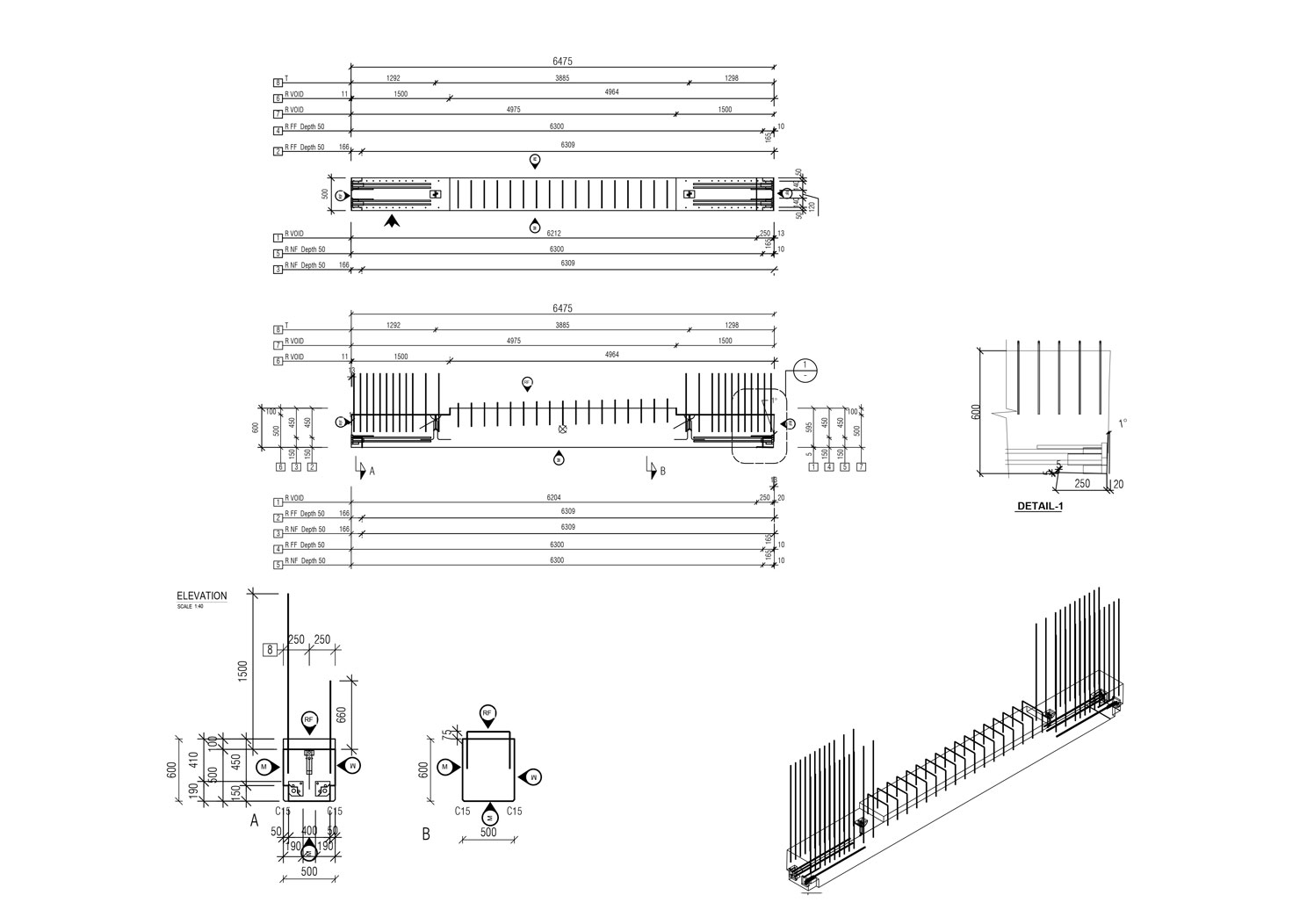
Beam FABRICATION Shop drawings by StruEngineers
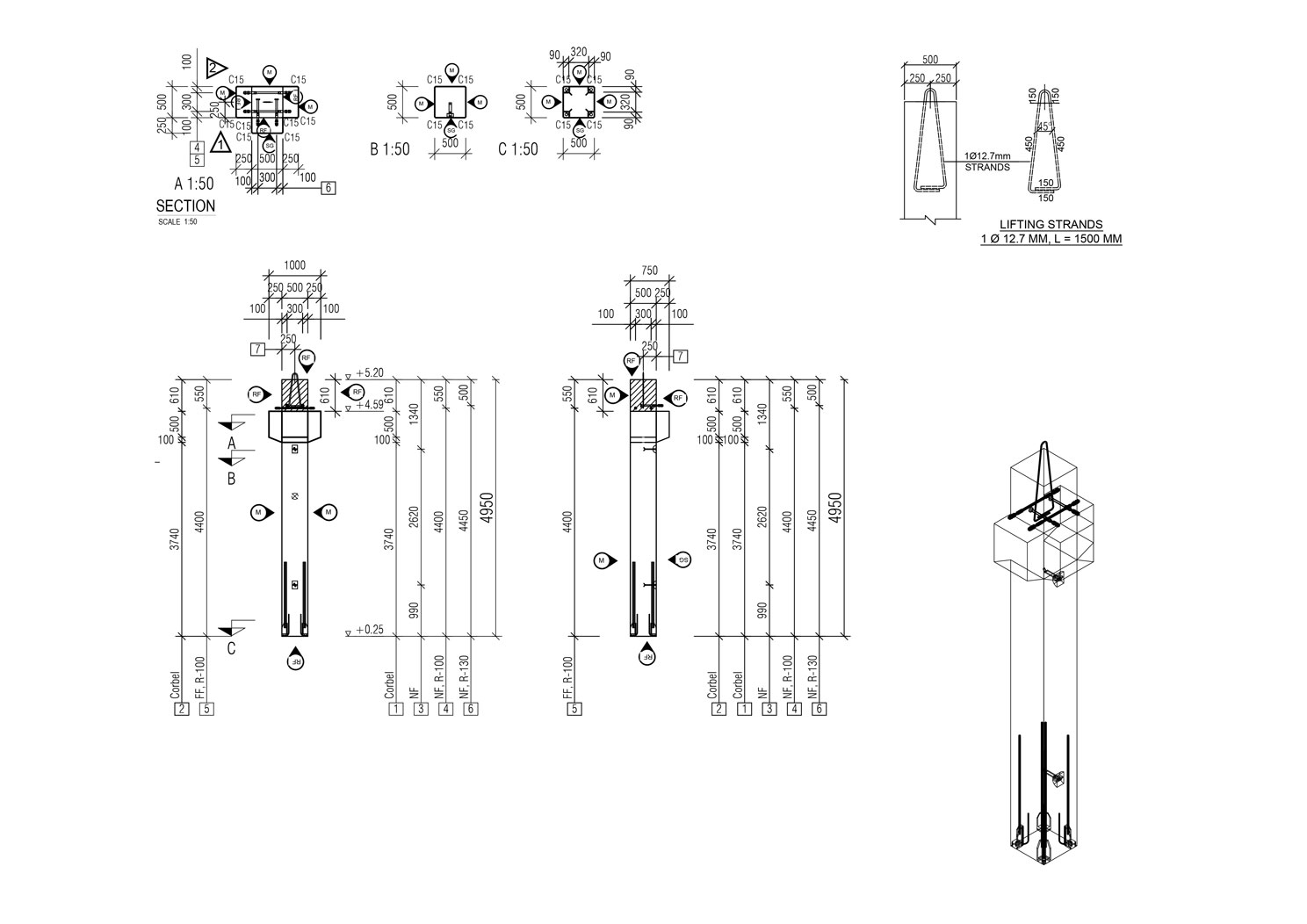
Column design FABRICATION Shop drawings by StruEngineers
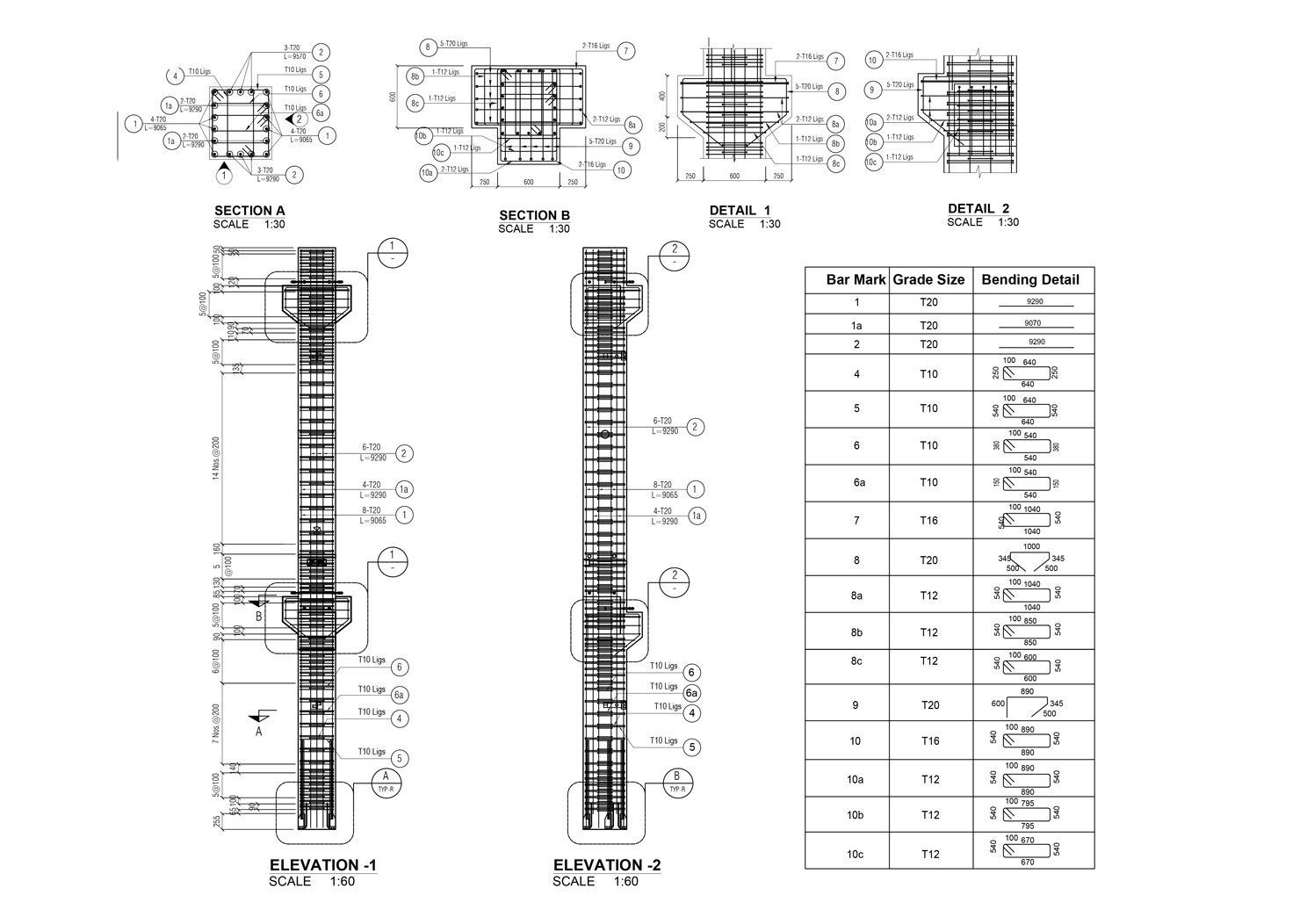
Column REINFORCEMENT shop drawing by StruEngineers
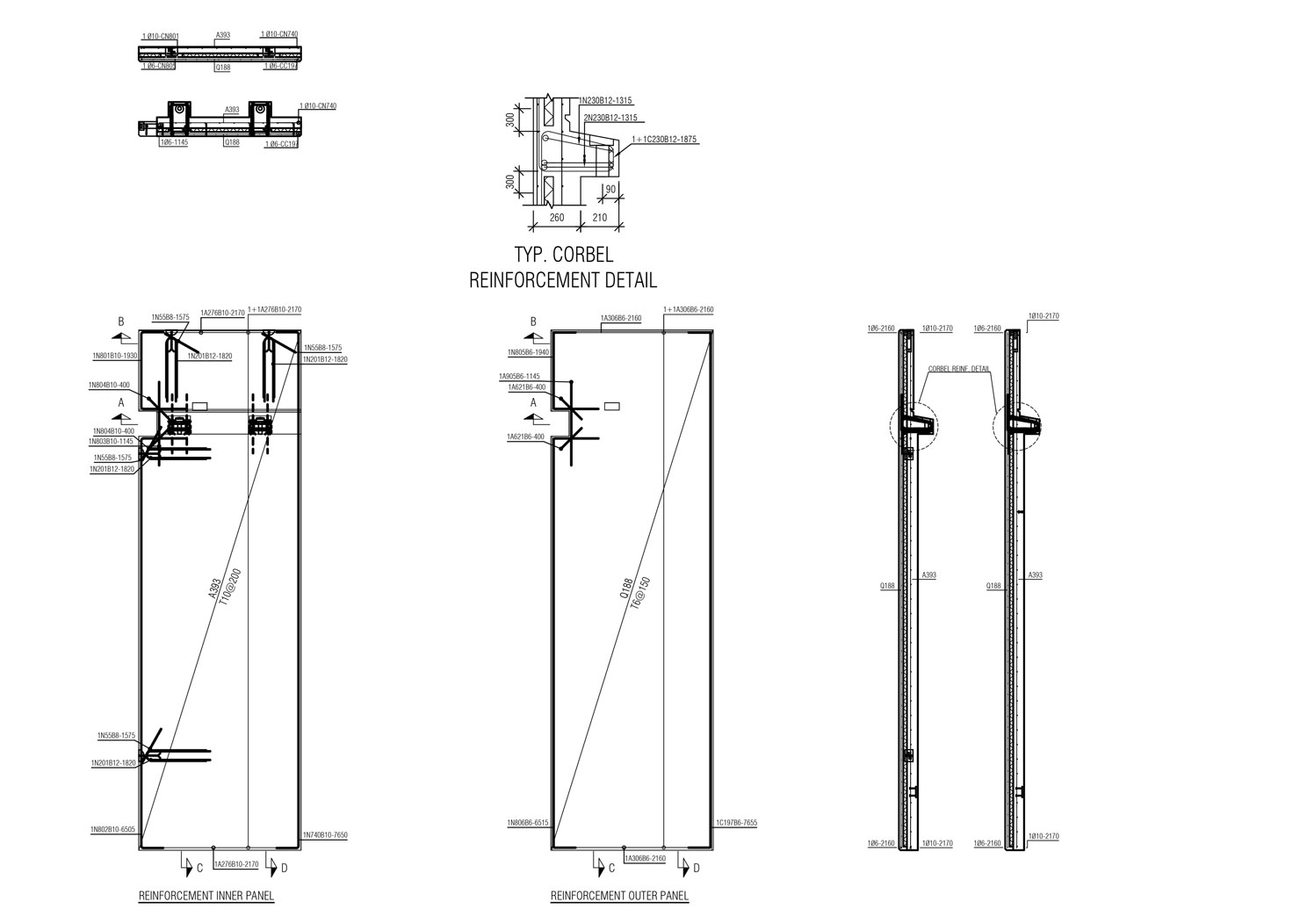
Corbel REINFORCEMENT Shop drawings by StruEngineers
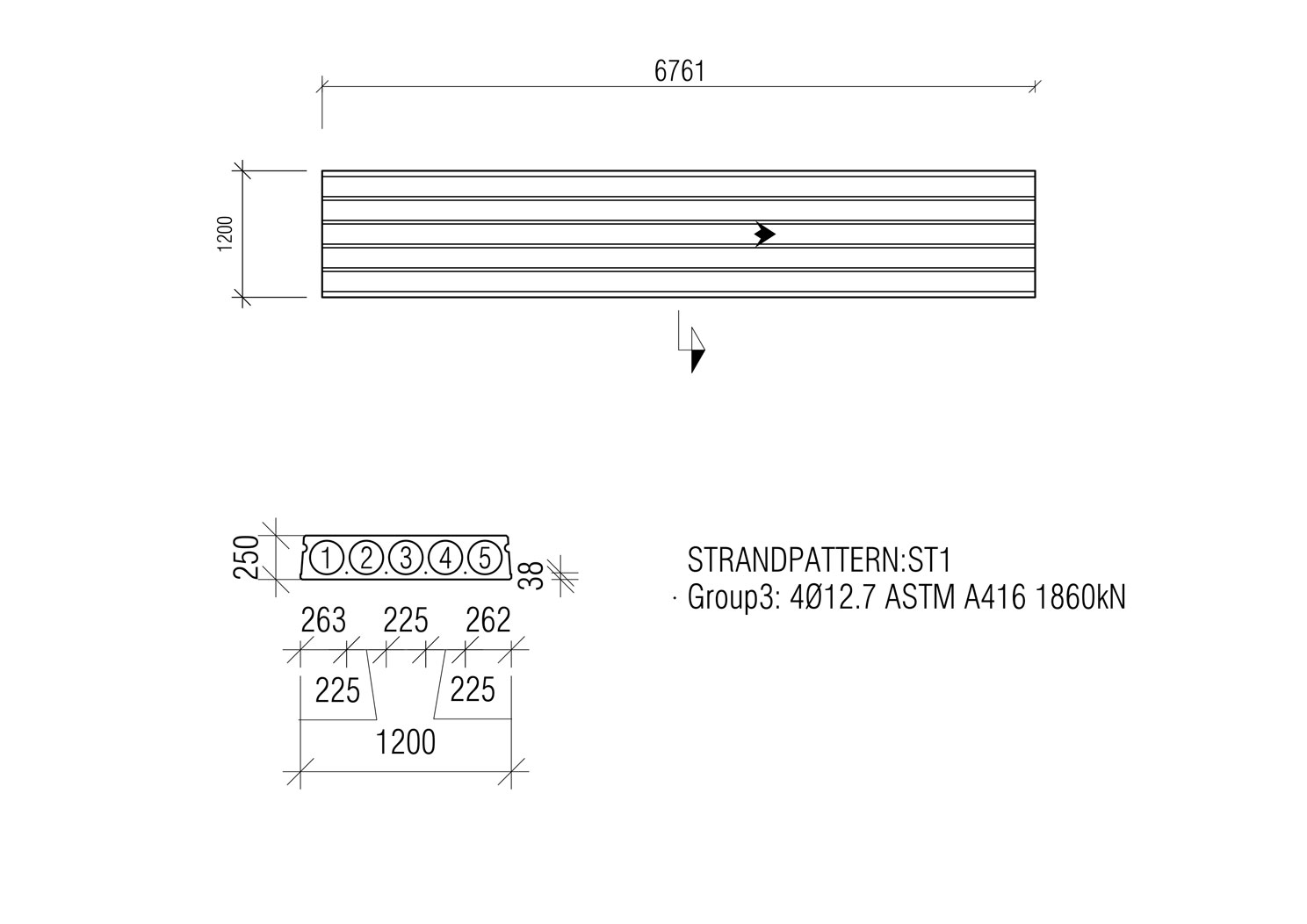
Hollowcore FABRICATION Shop drawings by StruEngineers
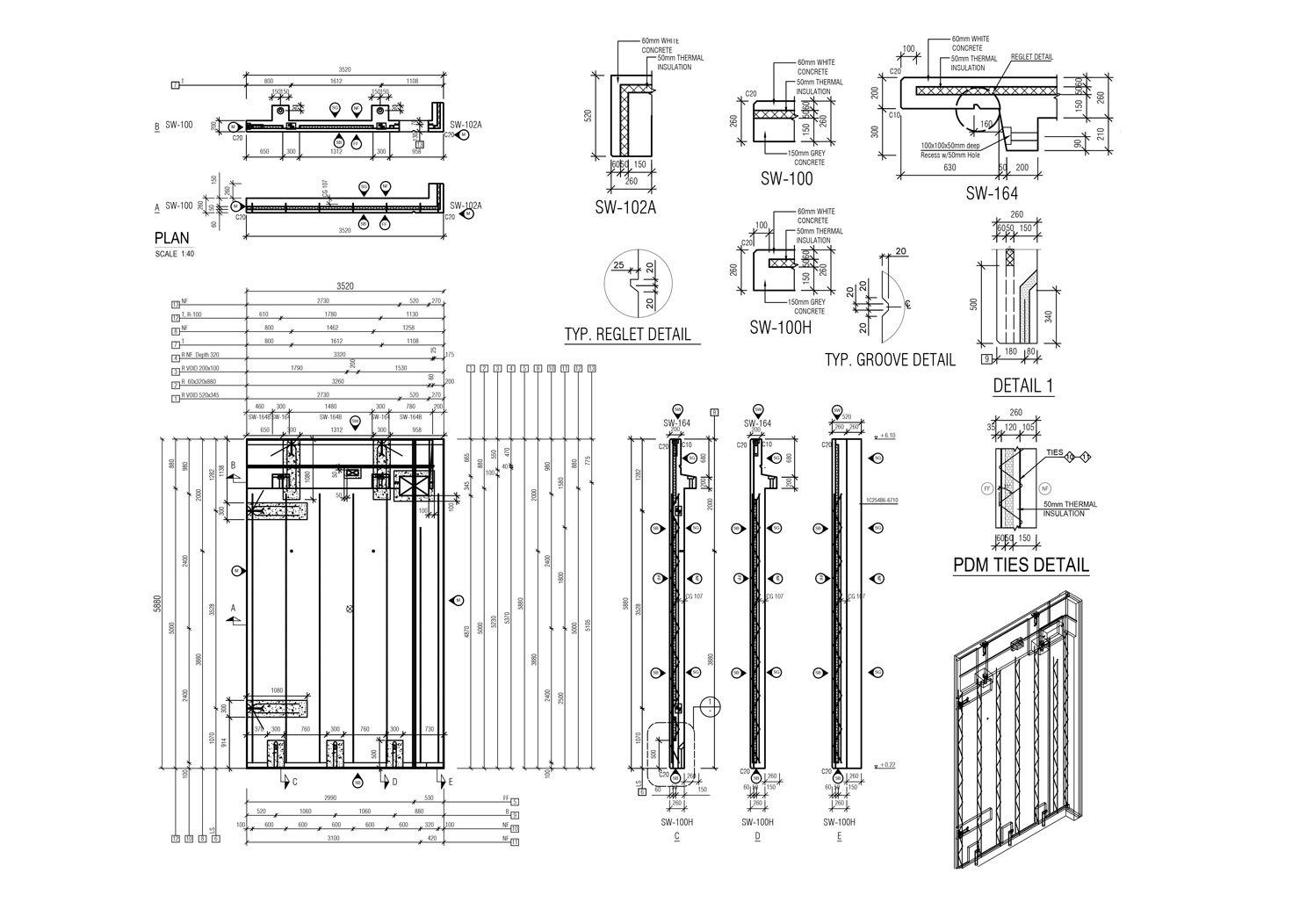
Sandwich wall FABRICATION Shop drawings by StruEngineers
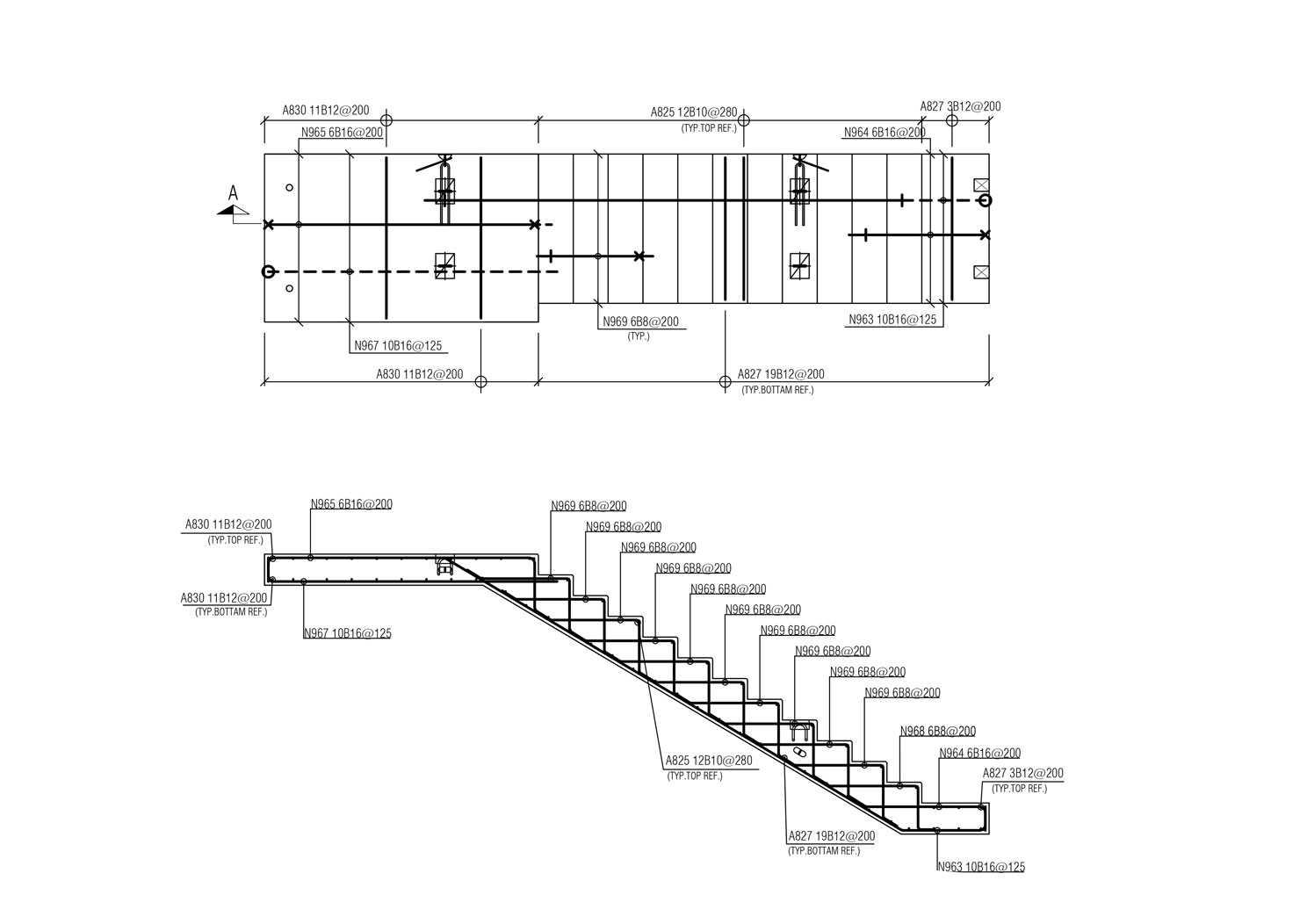
Stairs REINFORCEMENT shop drawing by StruEngineers
Overcoming Challenges
Every large-scale project faces hurdles; for this development, the obstacles were primarily logistical:
- Global Coordination: Managing time zone differences between the engineering team and stakeholders required a structured communication “hand-off” protocol.
- Data Exchange: Working outside the cloud necessitated a highly disciplined file-sharing system to prevent version lag.
Results: Despite these constraints, the 5-person specialized team maintained a simultaneous workflow of modeling and detailing, successfully delivering the entire project within the 8-week window.
Conclusion
This project serves as a benchmark for how Precast Building Systems can be leveraged to deliver complex, multi-functional commercial hubs in record time. By focusing on precise face definitions, strategic tolerances, and expert modeling, we provided the client with a blueprint for a seamless, high-speed construction phase.