Introduction
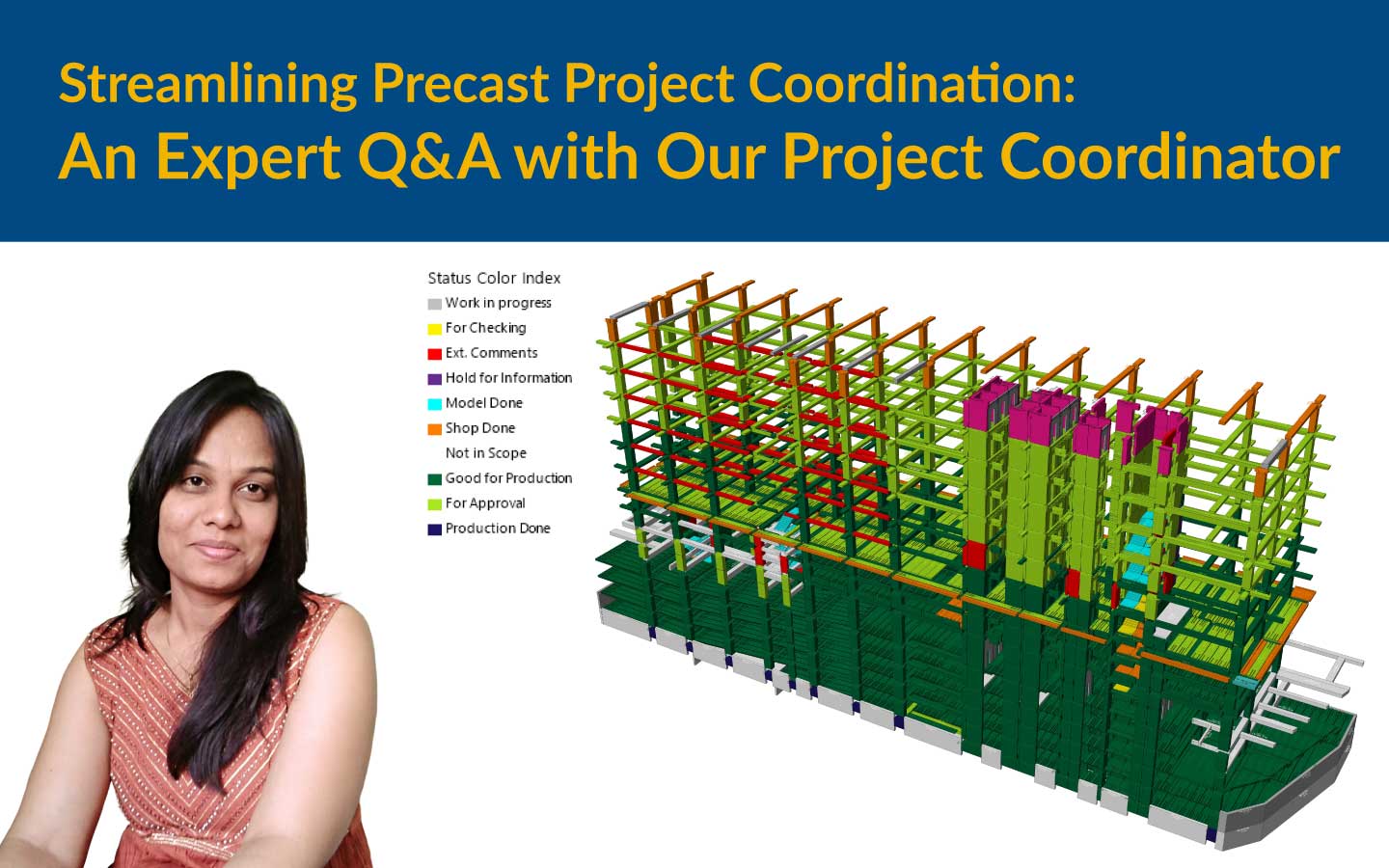
Modern urban development in India is defined by two competing pressures: restricted land availability and a surging population. To optimize space, contemporary Indian buildings are increasingly designed for multi-functional use. However, India’s vulnerability to seismic activity introduces severe constraints in structural analysis and design, necessitating highly complex structural detailing.
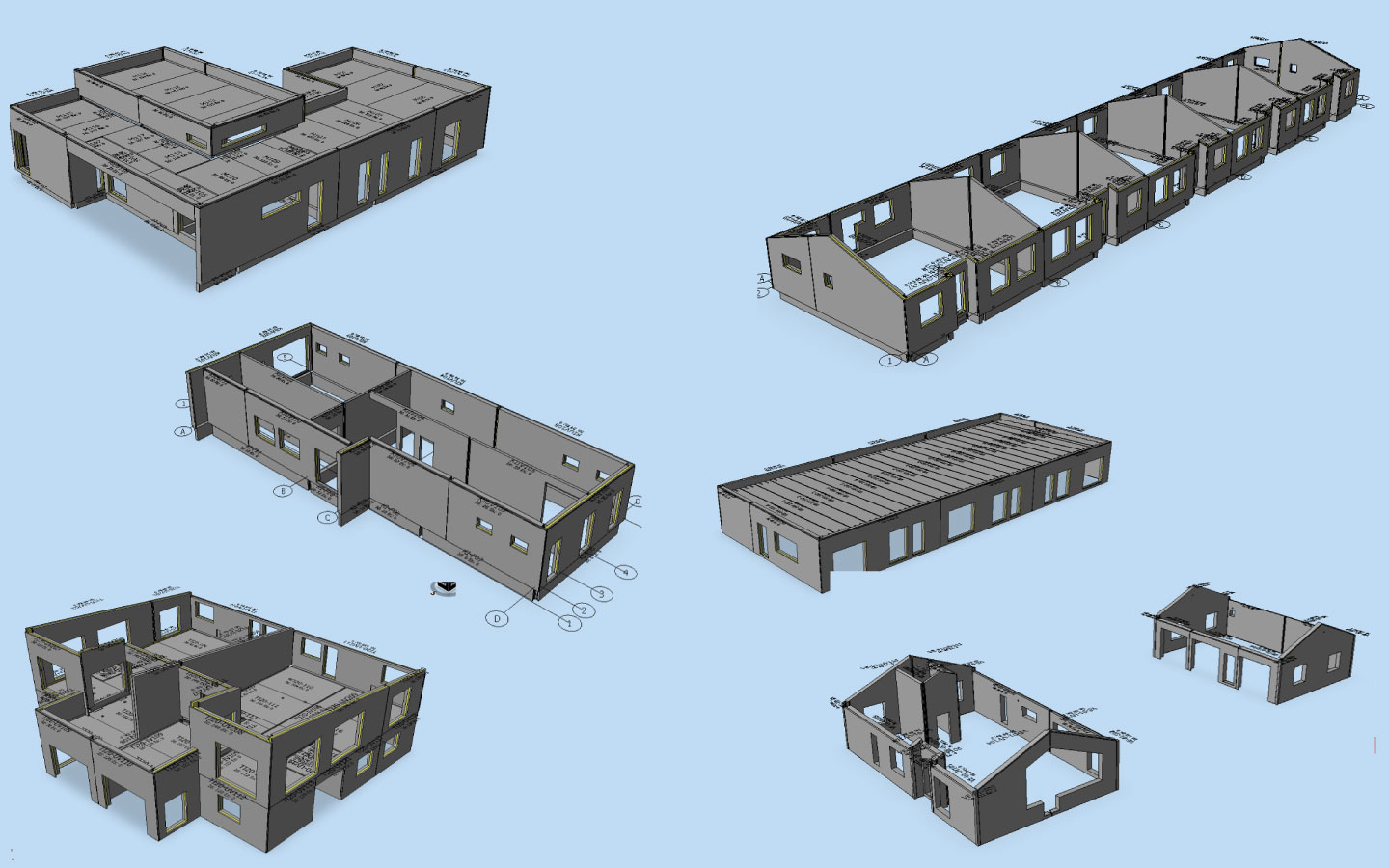
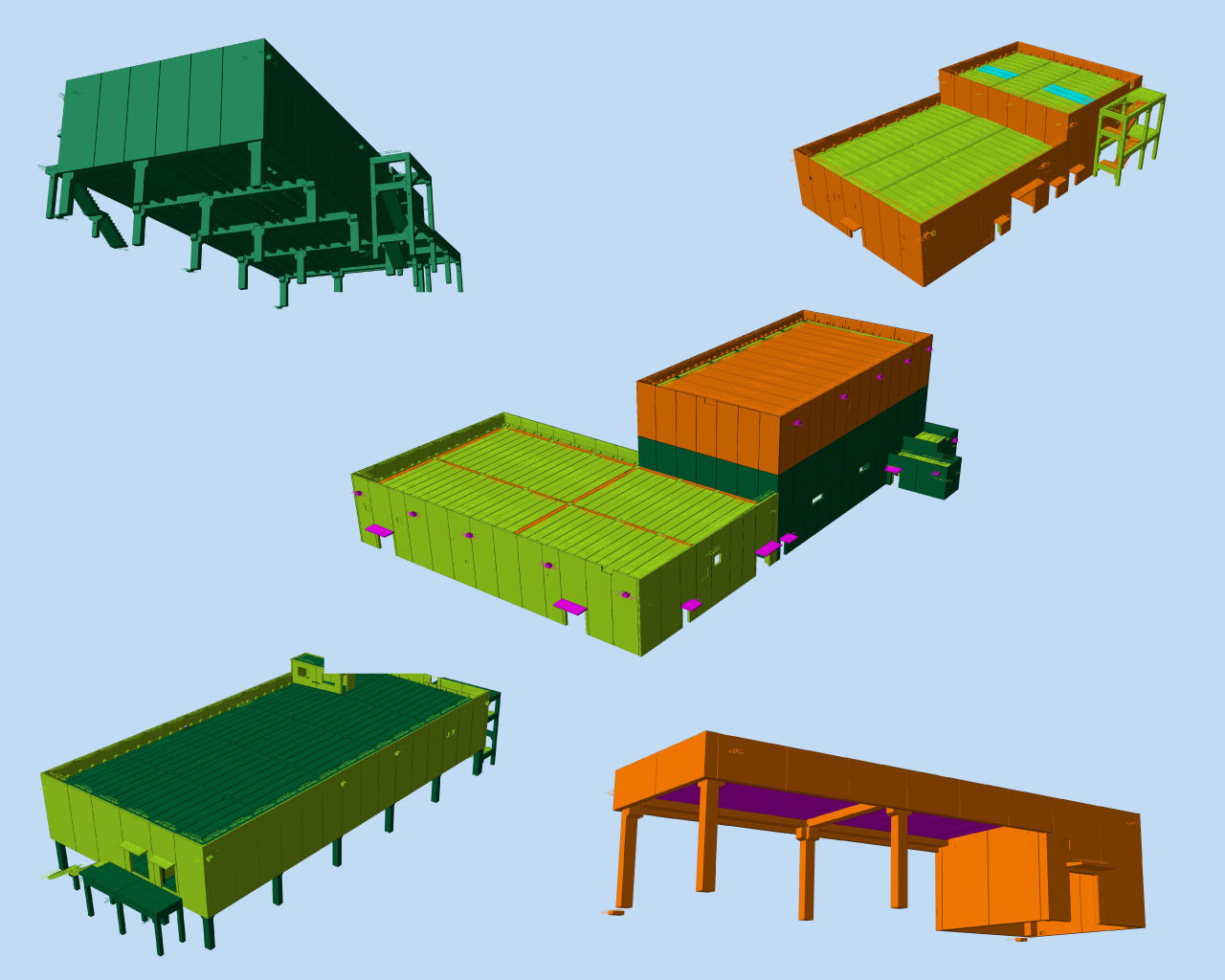
Beyond engineering challenges, financial dynamics and cash flow calculations dictate that speedy construction is a top priority. This case study explores how a comprehensive Precast Building System (PCBS) was successfully leveraged for a major commercial project in Pune, India, utilizing IMPACT software to balance structural complexity with rapid execution.
Project Overview & Scope
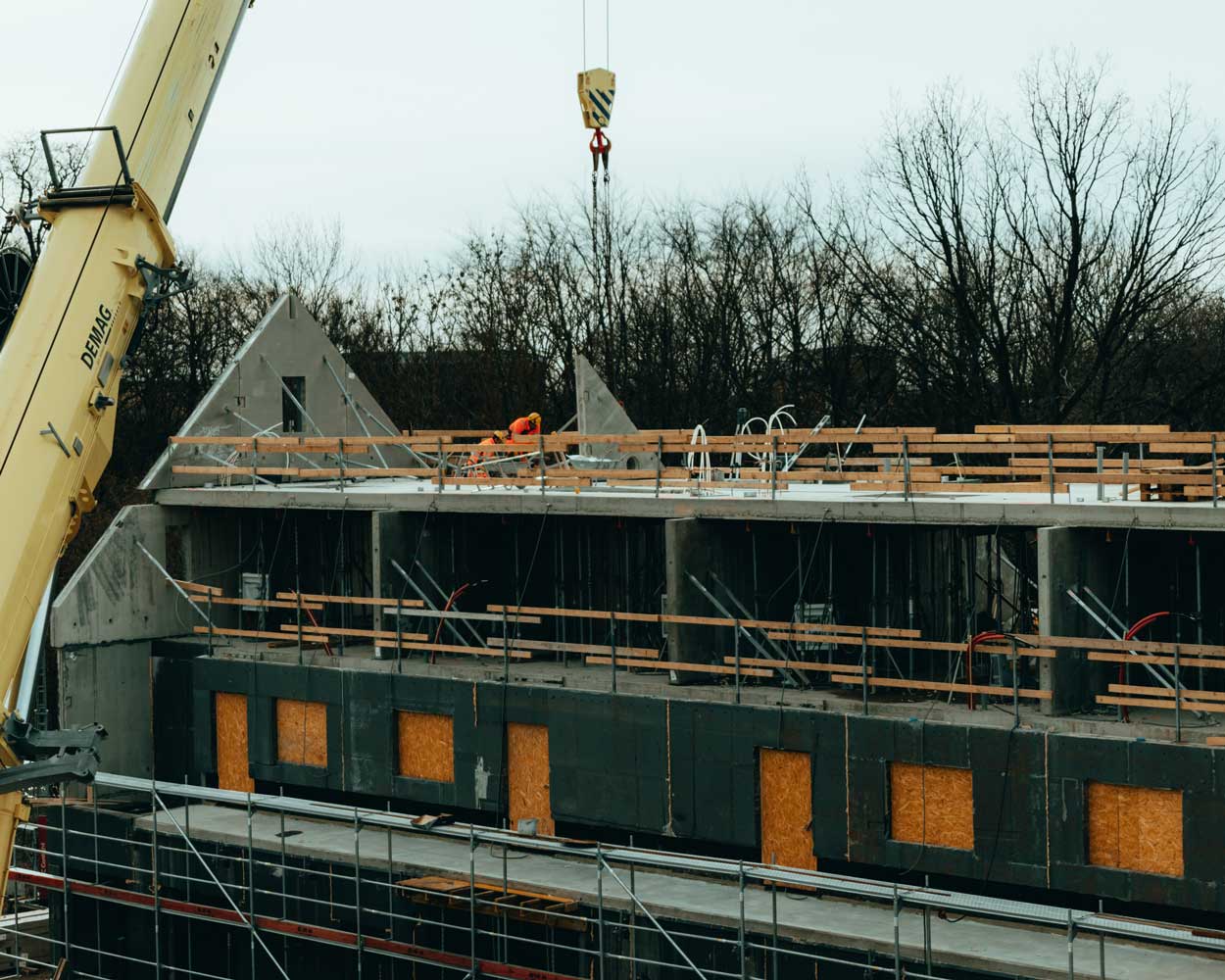
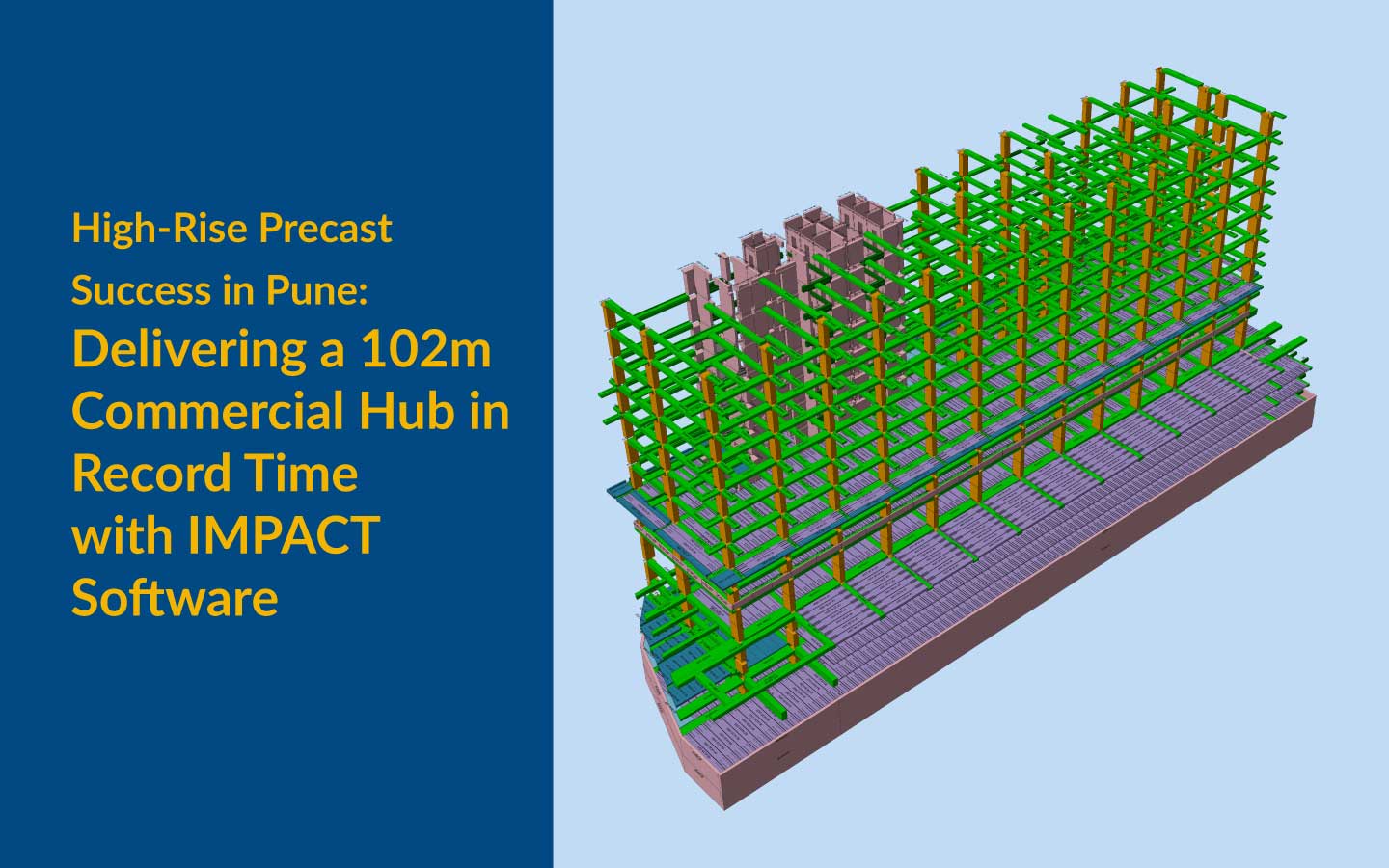
The project consists of a high-rise commercial building designed to meet diverse functional requirements across different tiers.
Key Dimensions & Layout
-
Total Height: Approximately 102 meters
-
Location: Pune, India (Seismic Zone III)
-
Floor Configuration: 5 Basements + Ground Floor + 2 Podiums + 15 Office Floors
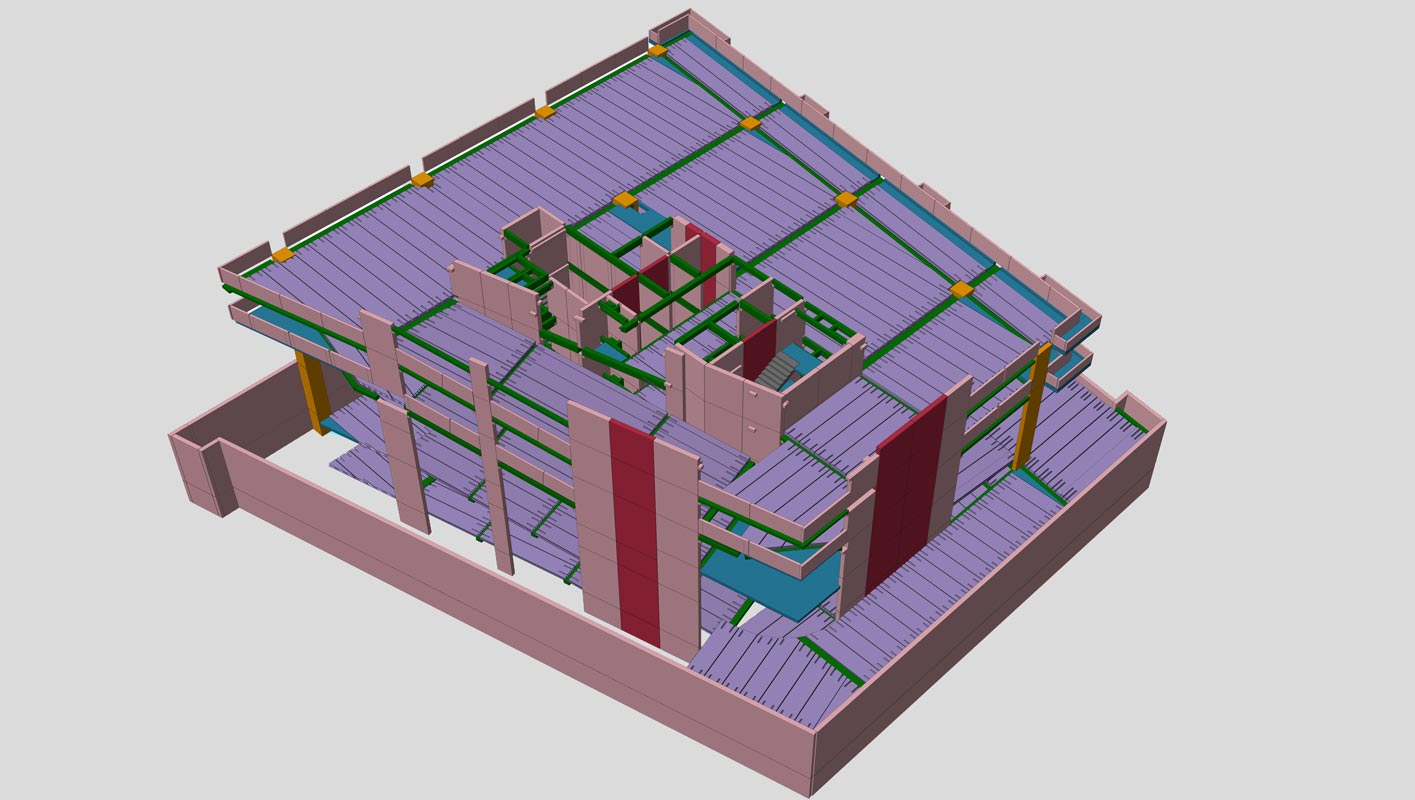
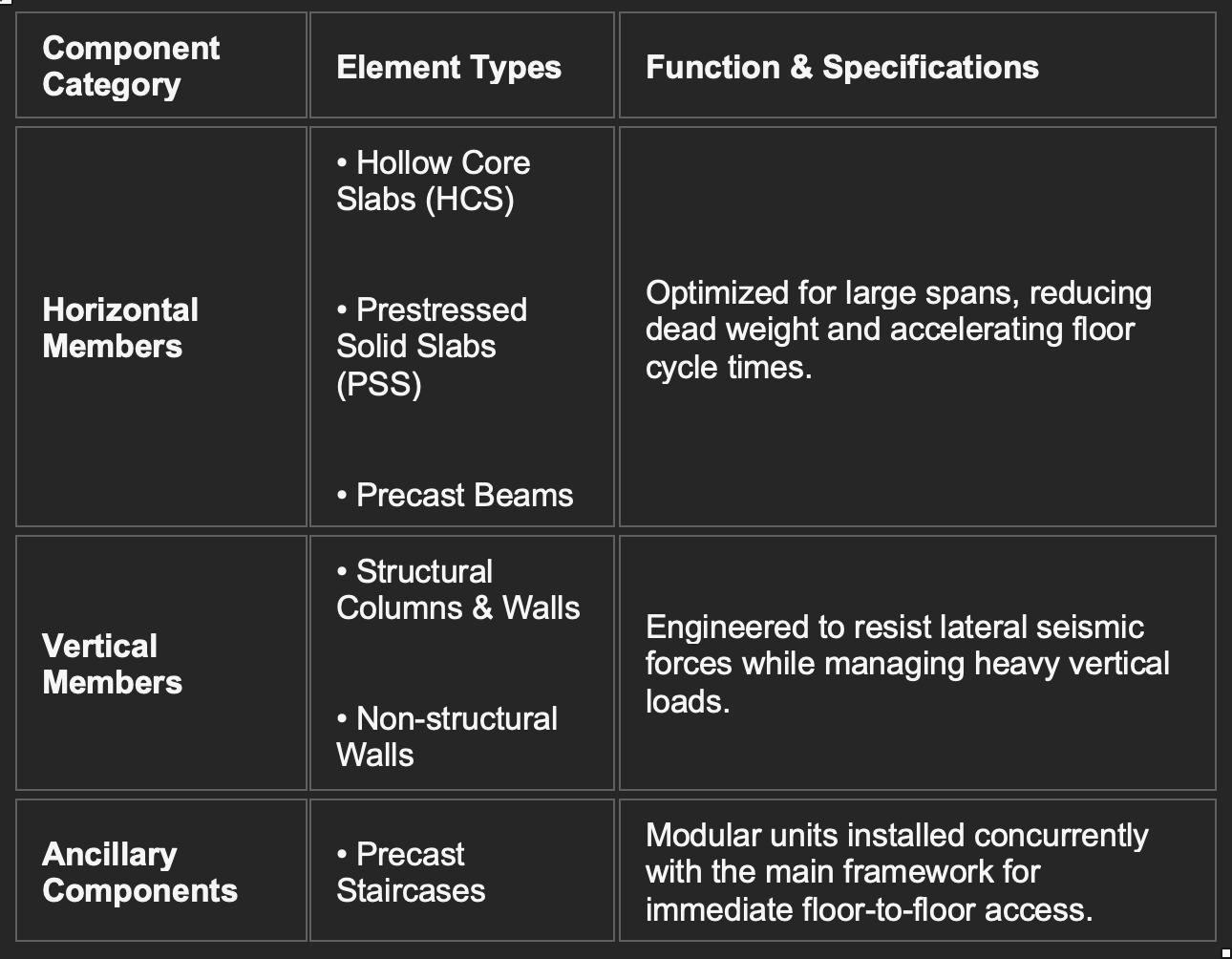
Structural Components Matrix
Engineering Precision: Tolerance & Logistics
To mitigate the risks inherent in assembling large-scale modular components, a rigorous 20 mm tolerance strategy was implemented for all precast elements (excluding staircases).
This proactive engineering measure served three critical functions:
-
Seamless Erection: Guaranteed smooth fitment during the on-site assembly phase, preventing alignment cumulative errors.
-
Risk Mitigation: Absorbed inevitable site-level construction deviations, eliminating the need for expensive, time-consuming on-site modifications.
-
Architectural Alignment: Minimized spatial conflicts between the load-bearing structural skeleton and the external architectural skin/façade.
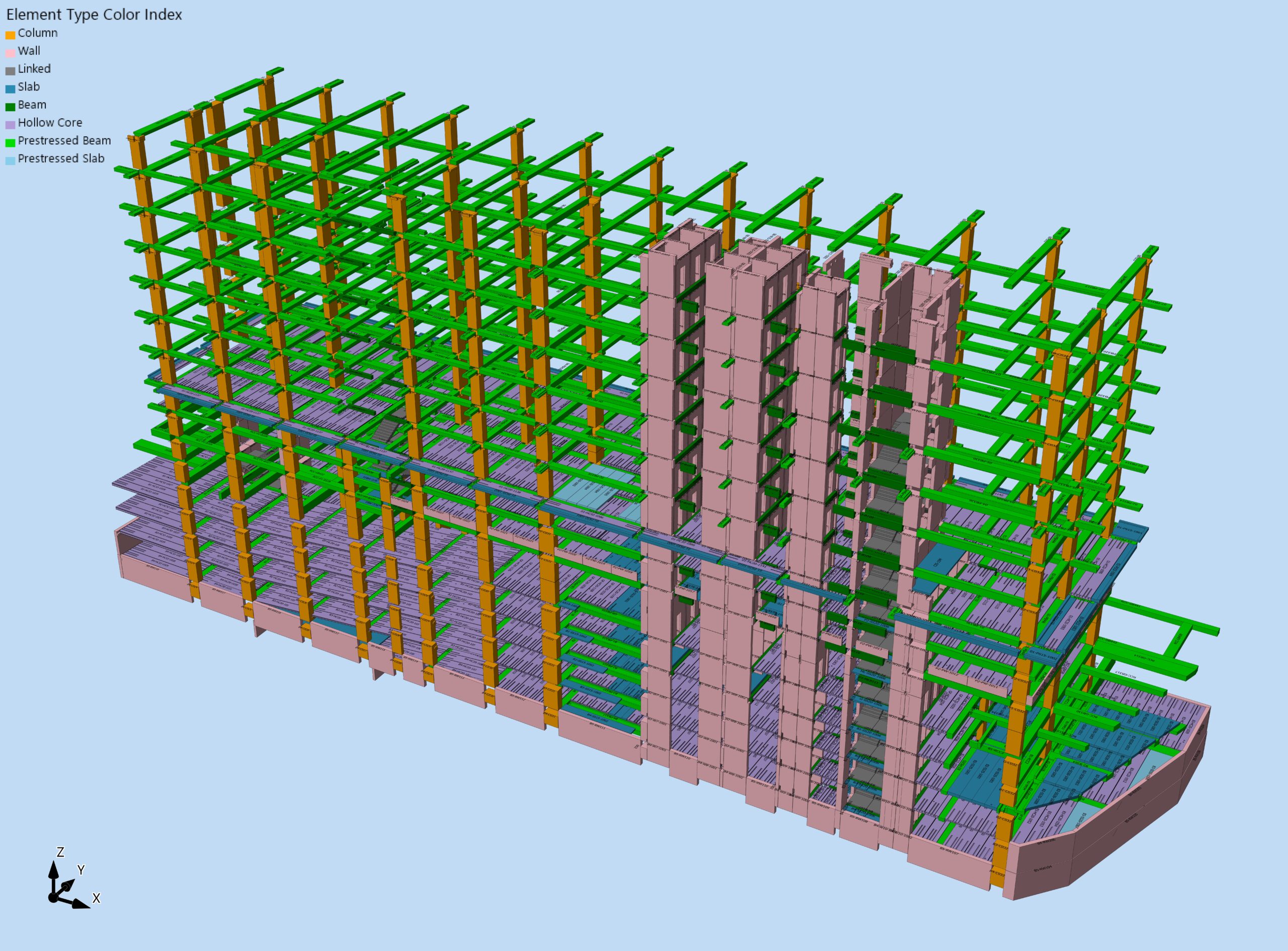
Challenges, Technology Stack & Workflow
Key Challenges
-
Design Transition: Converting a conventional Reinforced Cement Concrete (RCC) design into structurally integrated, production-ready precast shop drawings using IMPACT software. This transition required extensive cross-disciplinary coordination.
-
Reinforcement Congestion: Managing severe reinforcement clashes, particularly at highly stressed joineries such as beam-to-wall and beam-to-beam junctions.
-
Timeline Pressures: Aligning engineering deliverables with the aggressive production schedules of the casting factory and the erection schedules of the site team.
Technology Stack & Integrated Workflow
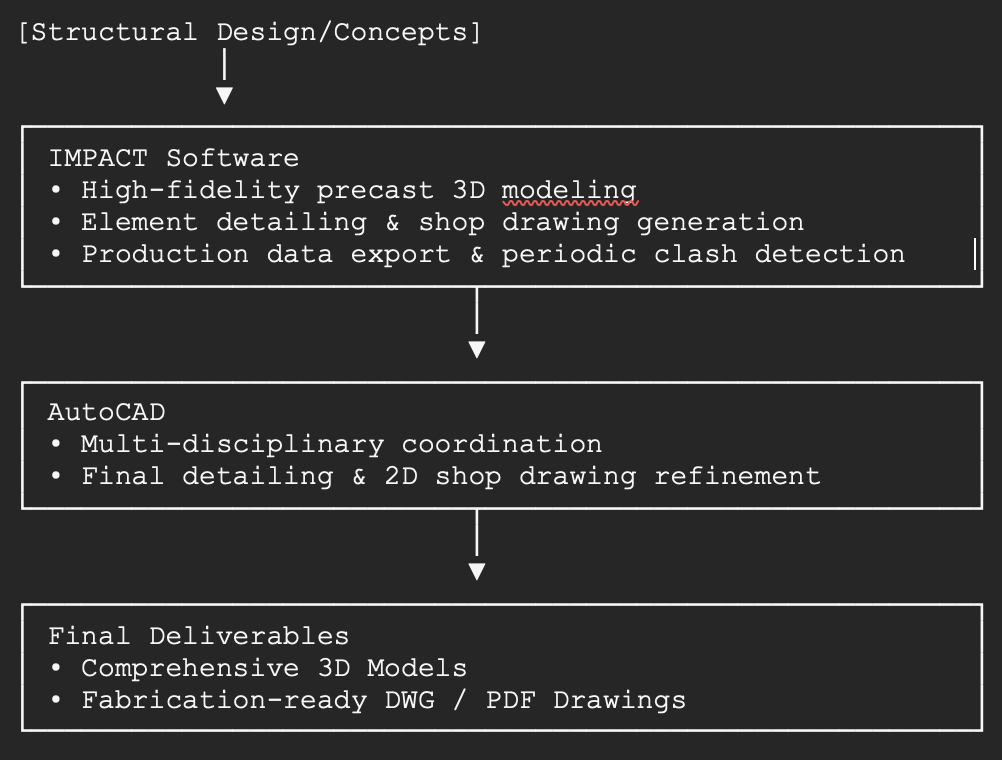
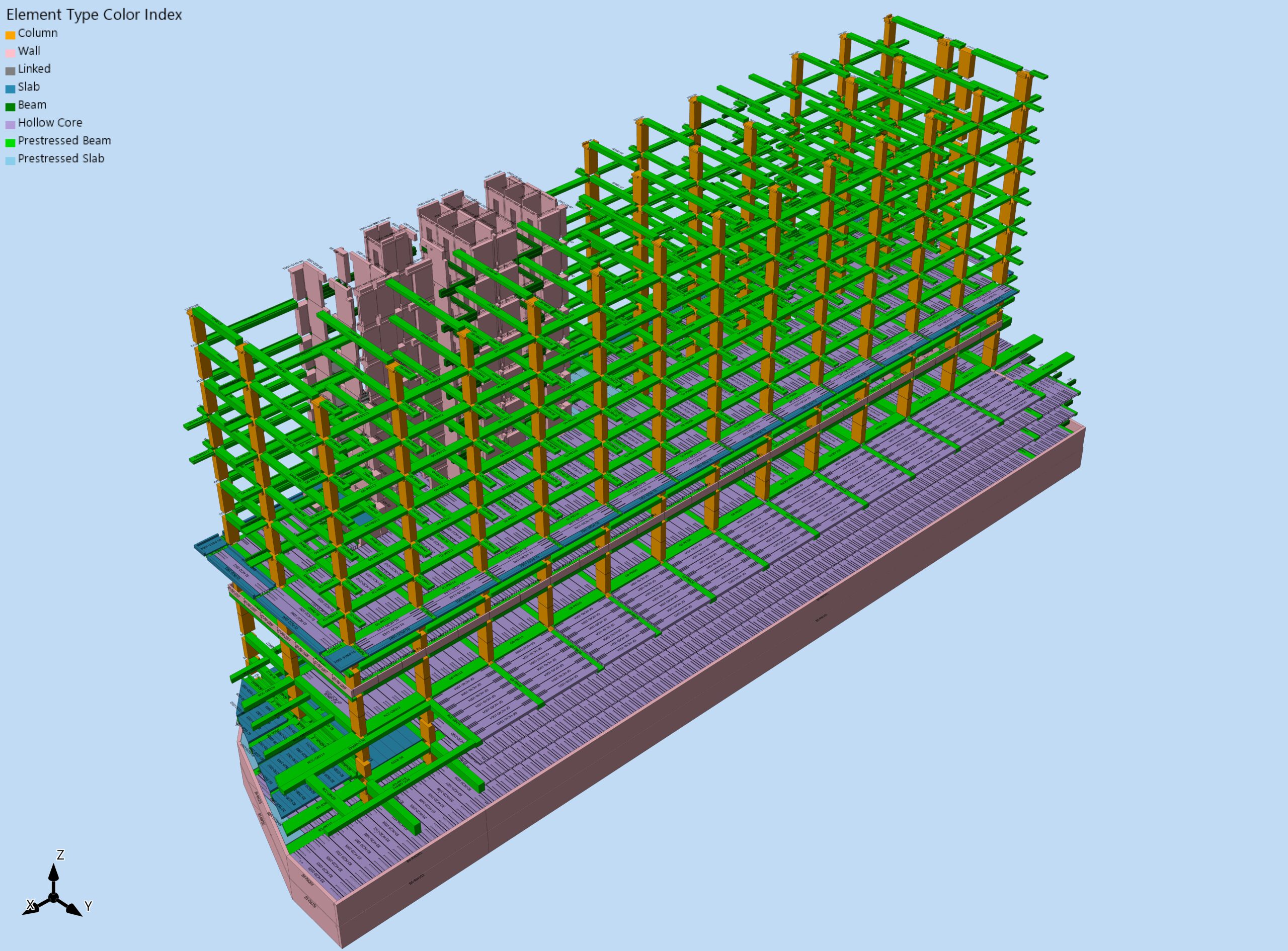
To resolve the reinforcement bottleneck, the team introduced a periodic clash-checking stage at regular intervals during the design phase. While this added initial time and effort, it successfully generated clash-free, integrated shop drawings that prevented catastrophic delays on the factory floor.
Overcoming Challenges & Project Delivery
The complex engineering hurdles were overcome by a lean, highly specialized team of 5 professionals. Through clear communication protocols and an optimized, simultaneous workflow—where 3D modeling and detailing ran in parallel—the team successfully bypassed traditional design bottlenecks.
Key Success Factor: Establishing strong, daily coordination channels between the design engineering team, the manufacturing plant, and site erection agencies ensured that deliverables perfectly matched the physical supply chain.
The entire project met its aggressive timeline targets, and the system continues to operate at the same high-efficiency pace for ongoing phases.
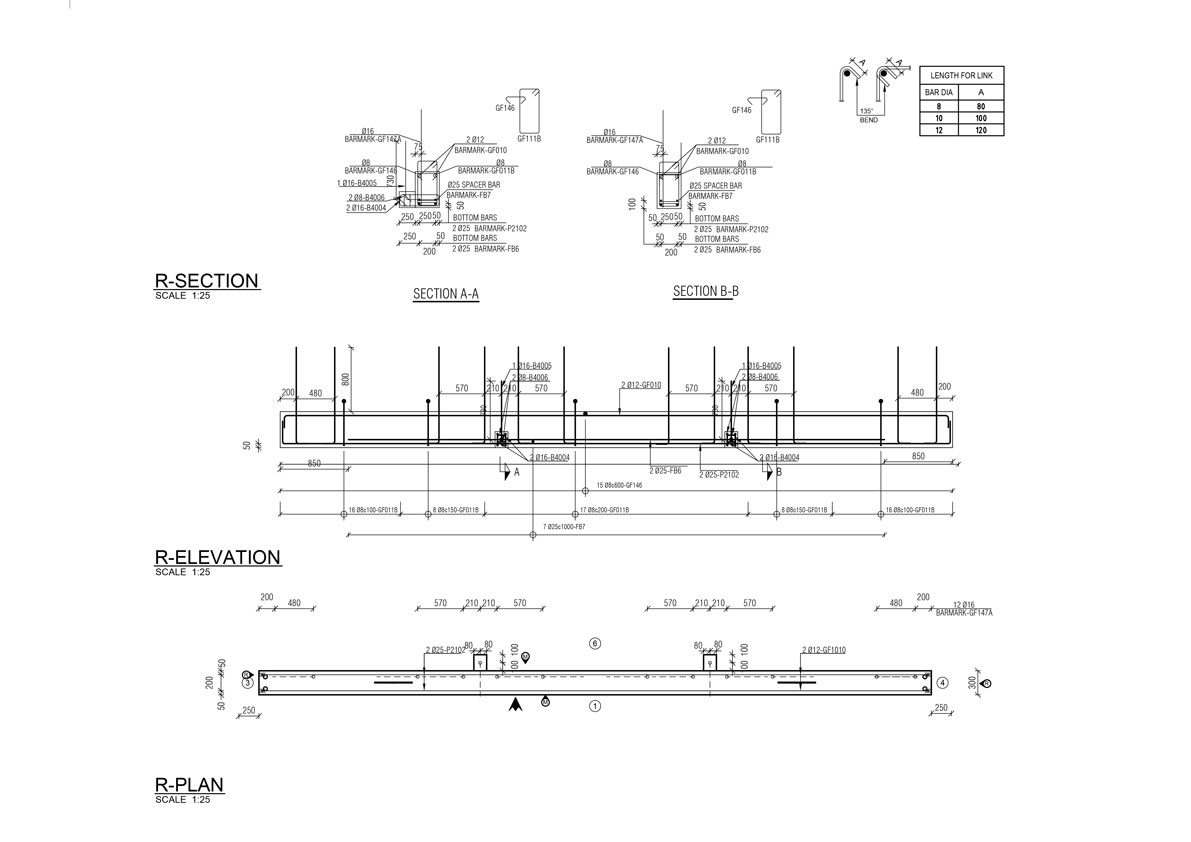
Precast Beam Reinforcement
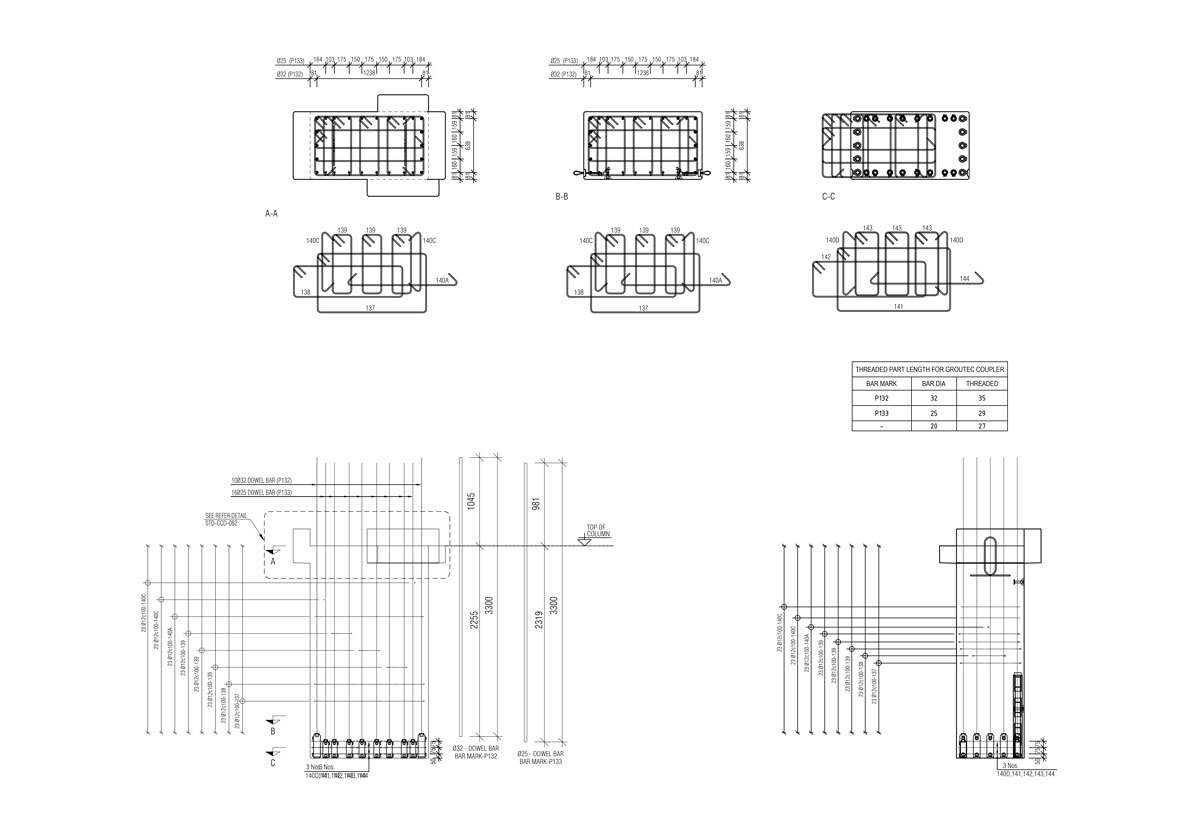
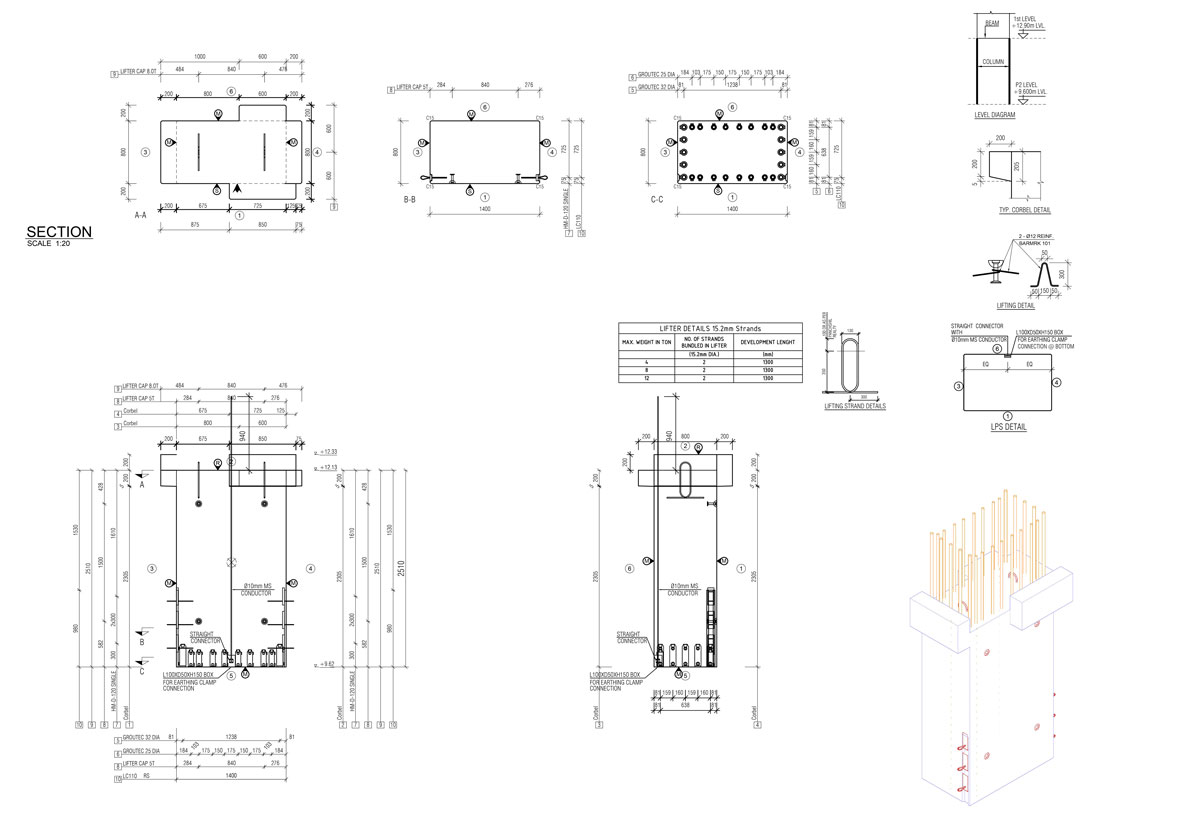
Precast Column Reinforcement
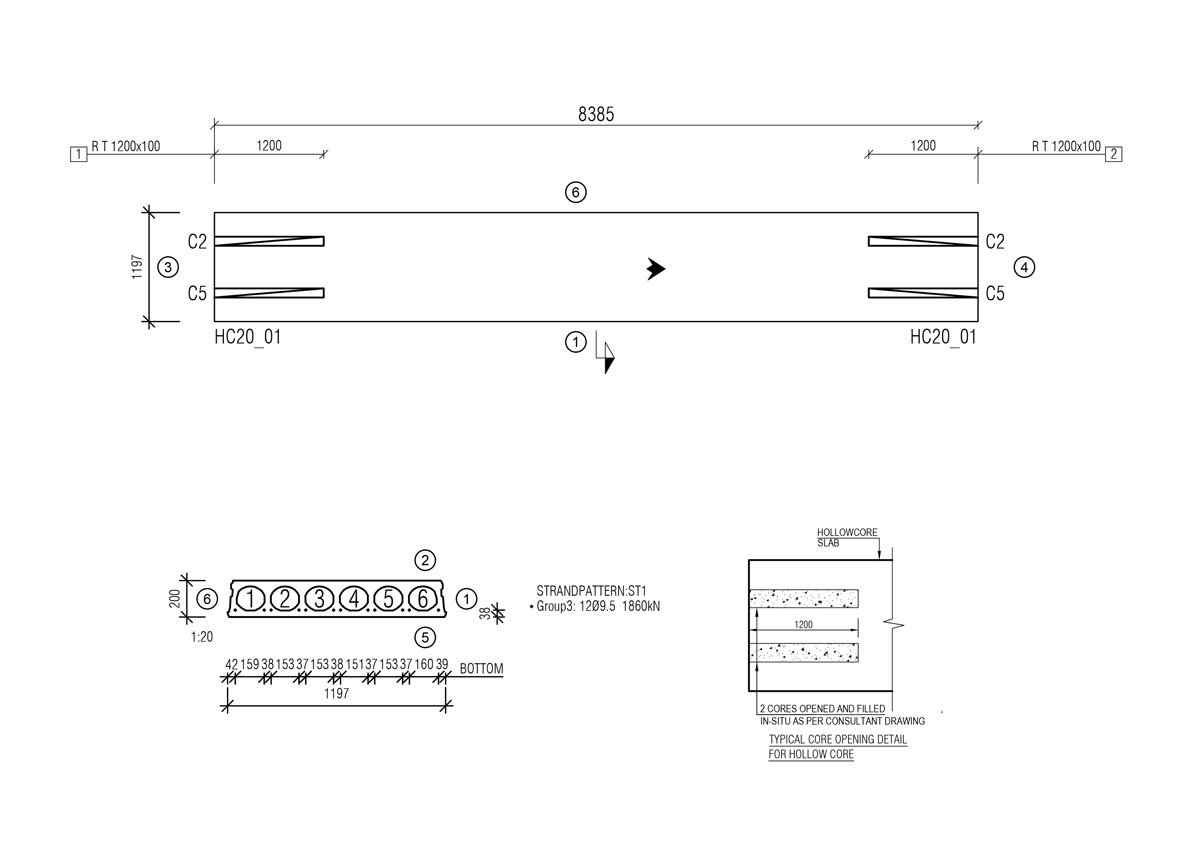
Precast Hollow core Mould
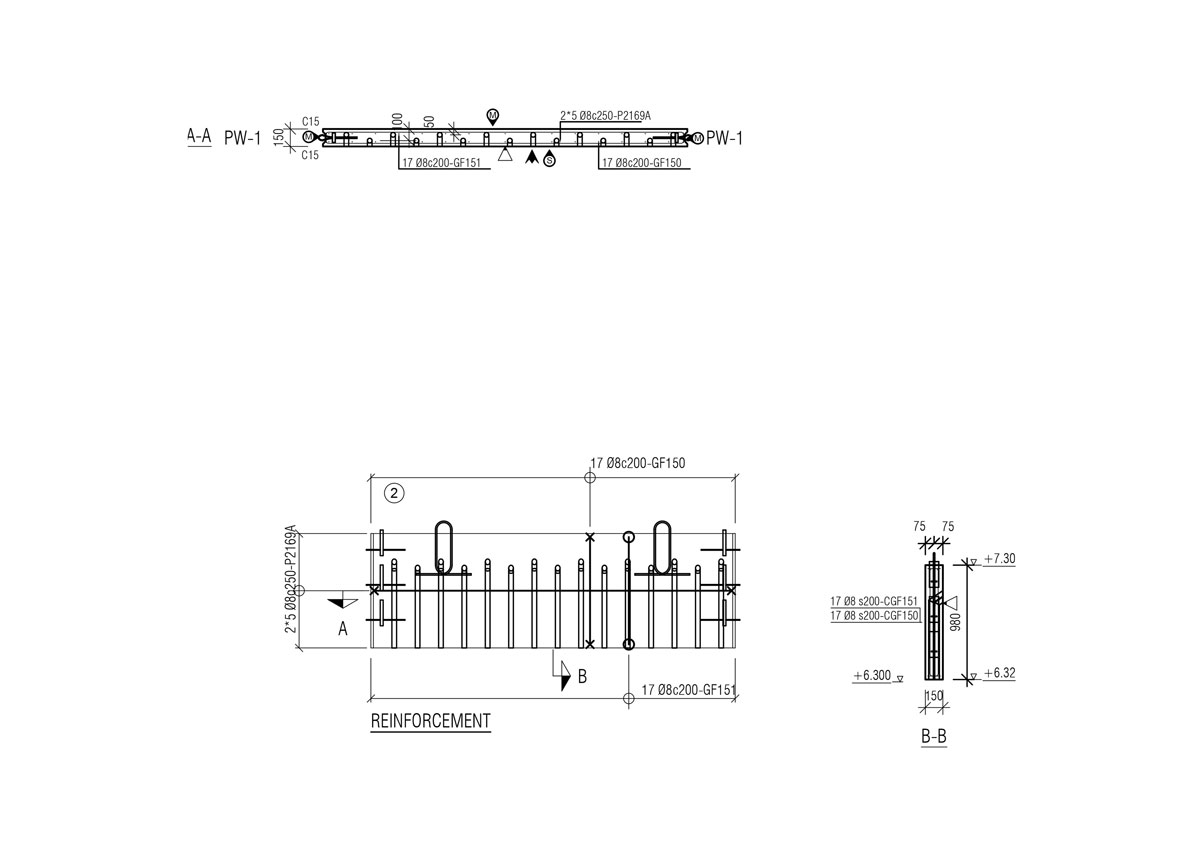
Precast Parapet wall reinforcement
Precast Wall Mould
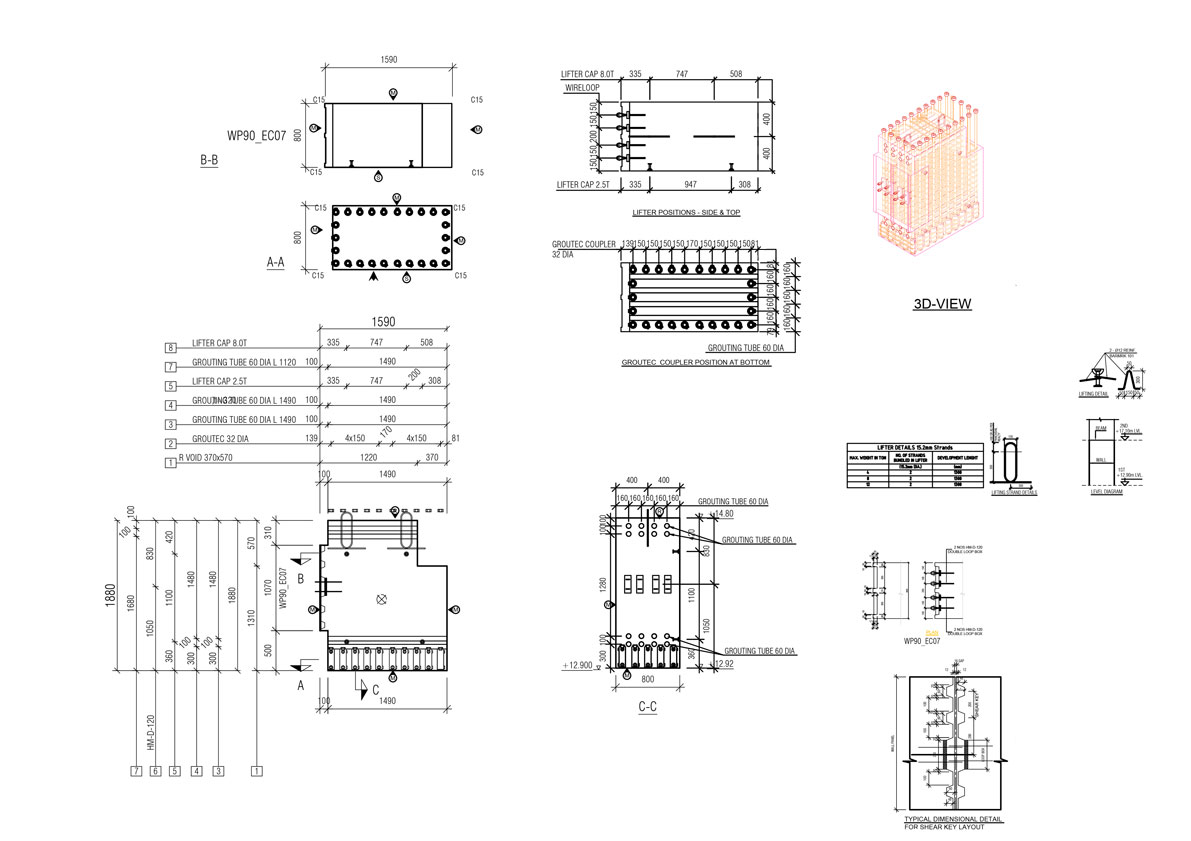
Precast Wall Mould
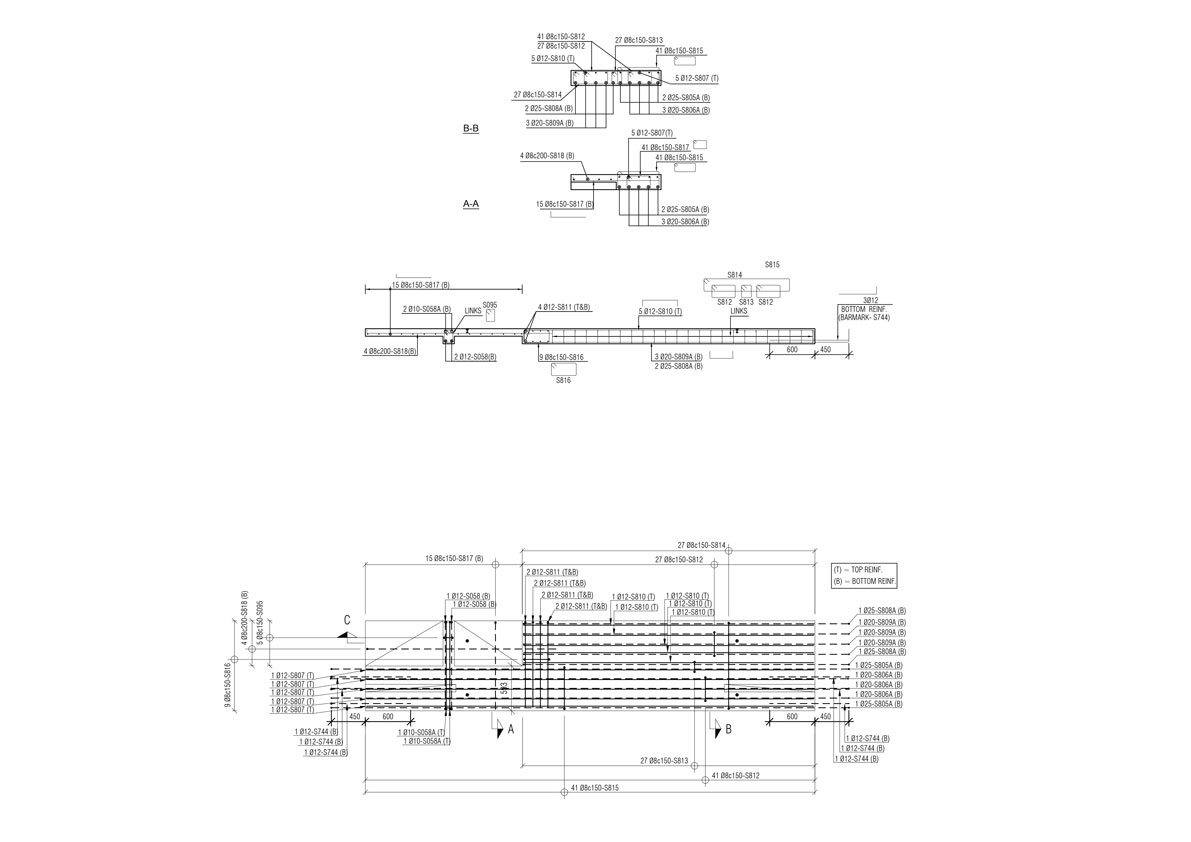
Solid Slab Reinforcement
Conclusion
This project serves as a regional benchmark for the Indian construction industry, demonstrating how Precast Building Systems (PCBS) can safely deliver complex, multi-functional high-rise commercial hubs under strict seismic constraints. By focusing on explicit face definitions, strategic tolerance management, and advanced BIM-driven software like IMPACT, the project team delivered a seamless transition from digital design to high-speed physical construction.